Tag Archive for: Millers for Nutrition

Unlocking Kenya’s $19.8 Billion BoP Market: Millers Step Up to Serve the Underserved

On the 3rd of July in Nairobi, Kenya, Millers for Nutrition alongside the National Duka Organization (NDO) and the Cereal Millers Association (CMA), hosted a dynamic workshop that brought together 40 senior leaders, including directors and sales executives from 21 milling companies. The goal: to spotlight the enormous, yet largely untapped, potential of Kenya’s Base of the Pyramid (BoP) market.

Representing 70% of the national population and valued at an estimated $19.8 billion, the BoP market offers a game-changing opportunity for millers, particularly in delivering safe, adequately fortified foods. Despite its size and strategic importance, this market remains underserved, with poor access to fortified products.

The workshop delivered more than just insights. Participants visited low-income neighbourhoods in Nairobi, experiencing firsthand the gaps and possibilities at the last mile. They engaged directly with duka owners and consumers and were introduced to NDO’s aggregation model, a logistical innovation designed to simplify distribution to micro-retailers and reduce barriers for processors aiming to serve this segment.

This high-impact engagement not only strengthened market awareness among millers but also aligned directly with the Millers for Nutrition program’s mission: to scale access to fortified foods where they’re needed most. By opening new pathways into the BoP market, the workshop marked a critical step toward advancing both business growth and better nutrition outcomes for millions of Kenyans.
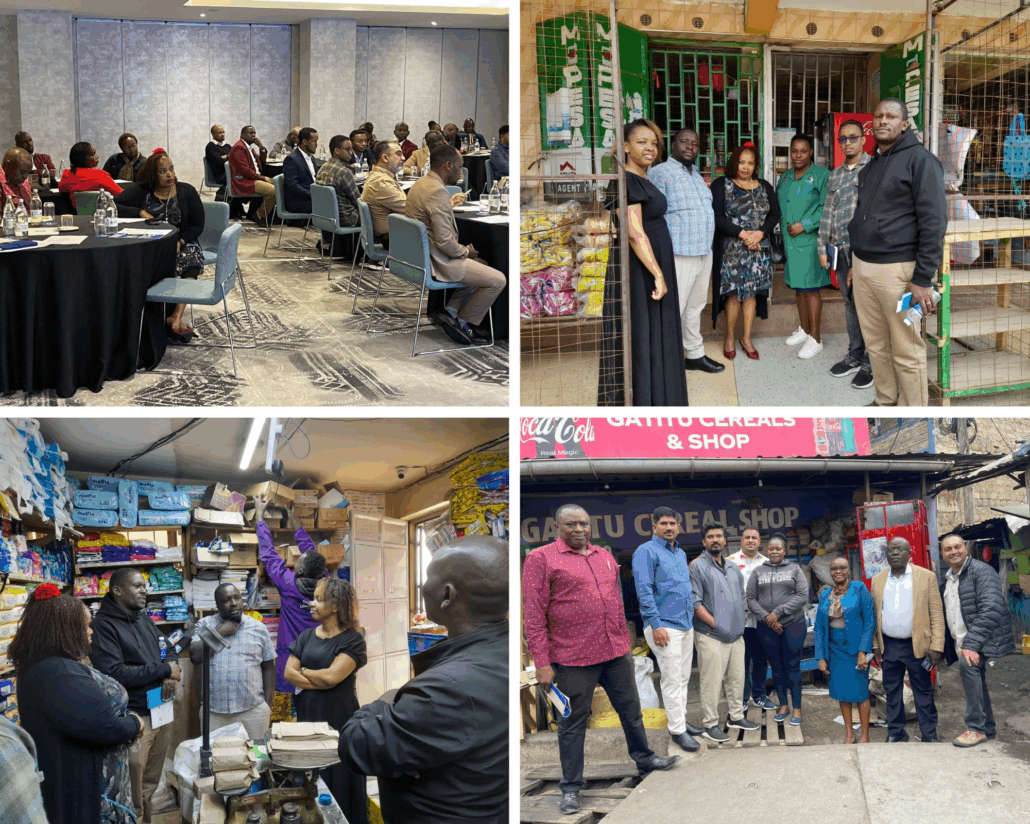
The top left picture captures participants at the workshop in Nairobi, Kenya and some more pictures from millers’ visits to neighborhood shops.

A group photograph of participants at the Millers for Nutrition Indonesia country launch

Millers for Nutrition 7th Country Launch in Indonesia

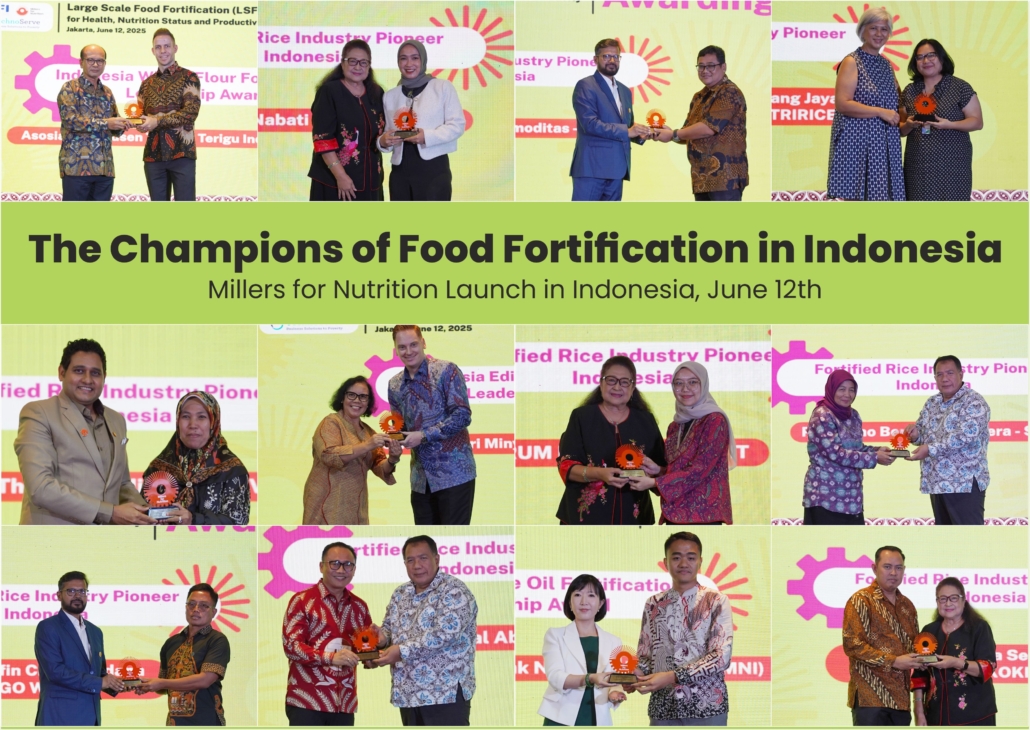
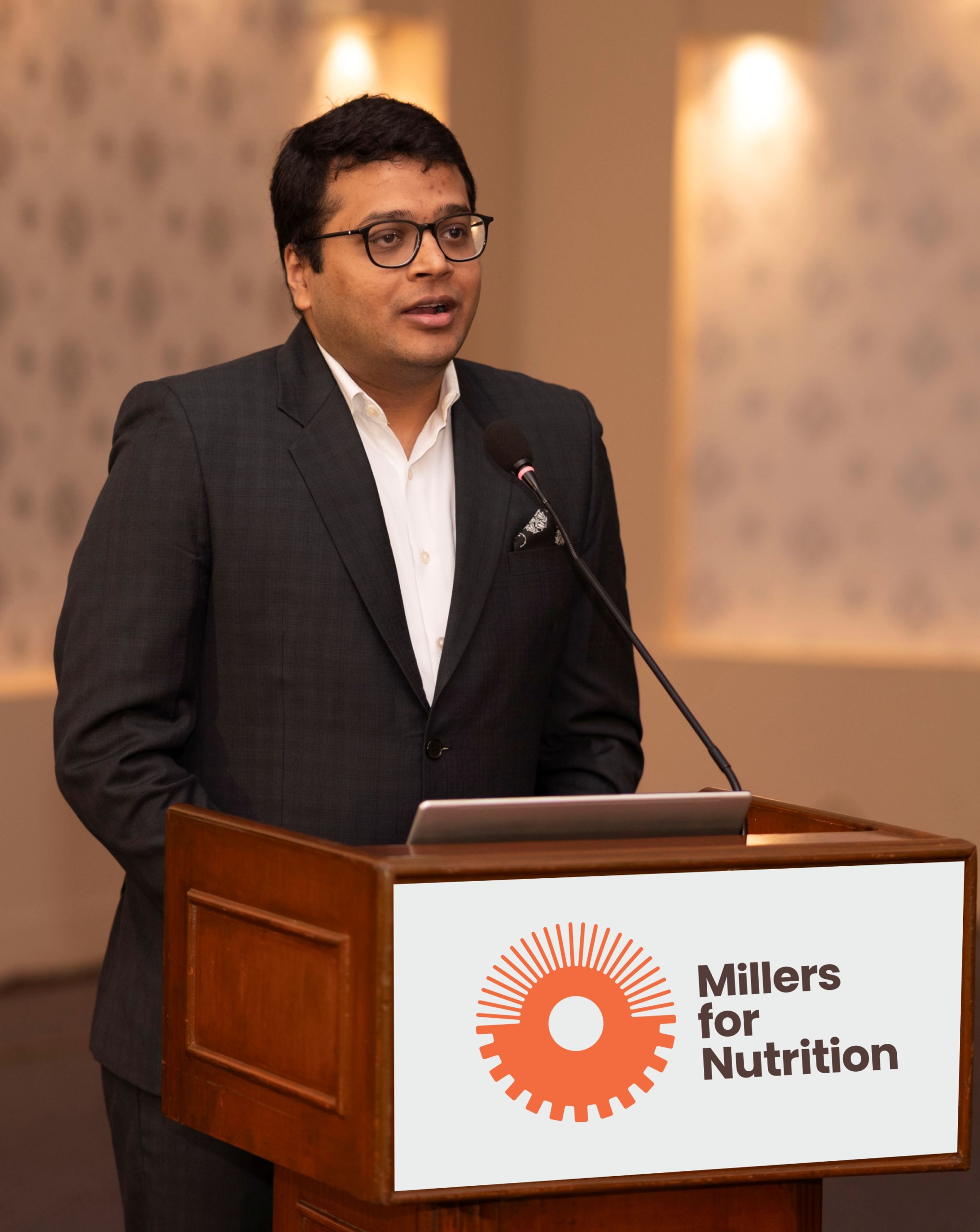
We are thrilled to share exciting news from Indonesia! Millers for Nutrition, a global coalition dedicated to enhancing food fortification, has officially launched its operations in the country. This major step was revealed at the “Large Scale Food Fortification (LSFF) for Health, Nutrition Status and Productivity” convening, co-hosted by the Indonesian Nutrition Foundation for Food Fortification (KFI) and TechnoServe.

Key stakeholders, including representatives from the Government of Indonesia (Ministry of National Development Planning (BAPPENAS), National Food Agency, and State Logistics Agency (BULOG), leading industry players, and national associations for wheat flour, edible oil, and rice millers, attended the launch event. Also present were representatives from our strategic fortification partners BASF, dsm firmenich, MC | Stern Vitamin, Buhler and Hexagon Nutrition. Their participation highlighted a unified commitment to improving national nutrition outcomes.

Millers for Nutrition supports millers to adequately fortify staple foods like wheat flour, edible oil, and rice with essential micronutrients. This aligns perfectly with the goals of KFI, a highly respected Indonesian food fortification foundation known for its expertise and commitment to the quality and sustainability of LSFF.

Indonesia marks the seventh country where Millers for Nutrition operates, joining Bangladesh, Ethiopia, India, Kenya, Nigeria, and Tanzania. The coalition employs an innovative model, connecting strategic fortification partners, technical experts, and other ecosystem partners to provide best-in-class technical assistance and business advisory services. This approach helps millers strengthen food quality, boost operational competitiveness, and unlock new market opportunities.

Monojit Indra, Senior Practice Leader at TechnoServe & Program Leader for Millers for Nutrition Asia, expressed his enthusiasm, stating, “We want to unite passionate stakeholders to support Indonesian Millers and food processors in achieving fortification excellence and driving meaningful change in the battle against malnutrition. Together, we can transform the future of nutrition in Indonesia.”

Mrs. Diah Lenggogeni, the Director for Public Health and Nutrition in BAPPENAS, delivered a keynote address, emphasizing the critical role of fortified foods in improving Indonesia’s health and nutritional status. She highlighted that addressing micronutrient deficiencies is a shared commitment requiring synergistic partnerships between the government, food industry, and supporting organizations.

Indonesia Wheat Flour Fortification Leadership Award: Asosiasi Produsen Tepung Terigu Indonesia (APTINDO)
Indonesia Edible Oil Fortification Leadership Award: Gabungan Industri Minyak Nabati Indonesia (GIMNI) and Asosiasi Industri Minyak Makan Indonesia (AIMMI)
Indonesia Rice Fortification Advocate: Ir. Sutarto Alimoeso, MM

Additionally, several fortified rice producers were celebrated as Fortified Rice Industry Pioneers in Indonesia:
PT. Thara Jaya Niaga
PT. Food Station Tjipinang Jaya (PERSERODA)
PT. Sinar Makmur Komoditas
PT DEWA TUNGGAL ABADI
Perum BULOG
PT PANGAN NABATI UMBI NUSANTARA
PT. Siamo Berkah Sejahtera
PT. Microfin Cipta Perdana
BPS – PT Buyung Poetra Sembada, TBK

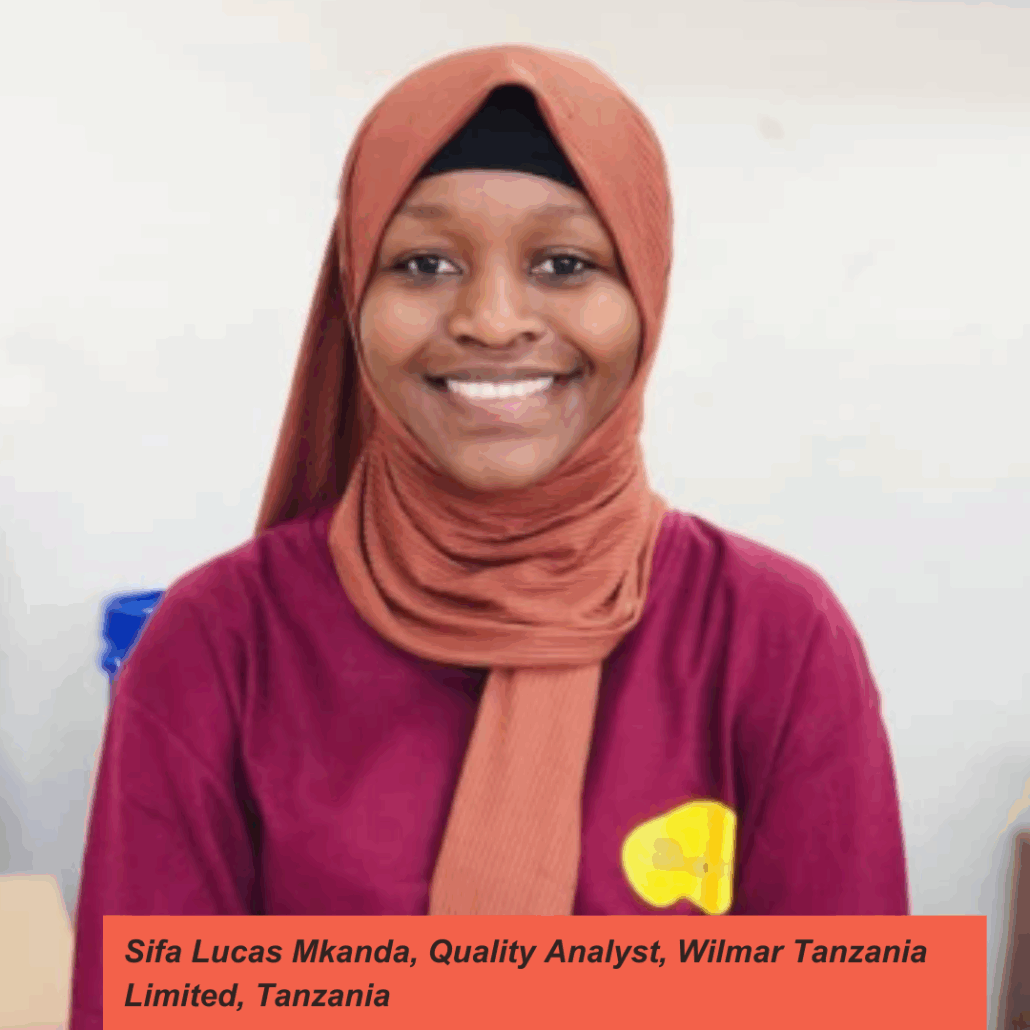
Miller of the Month – Sifa Lucas Mkanda, Quality Analyst at Wilmar Tanzania Limited

Our Miller of the Month for July is Sifa Lucas Mkanda, a Quality Analyst at Wilmar Tanzania Limited. Sifa’s role has consistently evolved to meet the demands of technological advancements and changing consumer preferences within the milling industry. Wilmar Tanzania Limited demonstrates a strong commitment to public health and regulatory compliance through its dedication to food fortification, especially in addressing malnutrition in East Africa.

How long have you been in the milling business? How has your role changed?

With five years in the milling industry, my role has evolved significantly due to technology and consumer shifts. Initially focused on lab analysis, quality, manual fortification, and food safety, my responsibilities now include integrating automation and ensuring fortification compliance. This evolution demands continuous learning and adaptation to technological and regulatory changes. Data-driven decisions optimize operations and meet demands for healthier, sustainable products. My journey reflects significant technological advancements and a growing emphasis on sustainability, transforming my role and positioning our operations for the evolving global market.

Why did you decide to join Millers for Nutrition?

We joined Millers for Nutrition to align our operations with global food fortification best practices, enhance our product quality, and contribute meaningfully to public health. This membership provides us with free technical assistance, including tailored training, product testing support, and access to online tools and business advice. These resources have been instrumental in improving our fortification practices and reducing compliance risks.

Tell us about your commitment to food fortification and Quality Assurance?

Wilmar Tanzania Limited is deeply committed to food fortification as a strategic approach to combat malnutrition in East Africa. Our dedication aligns with national policies and global initiatives aimed at improving public health. In April 2025, Tanzania implemented the 2024 Food Fortification Regulations, we have proactively embraced these regulations, ensuring compliance with the new standards. Additionally, Quality assurance is central to our fortification strategy. We have installed automated dosing equipment and implemented robust quality control systems to ensure the precise addition of Vitamin A. These measures guarantee that our products meet the required nutritional standards and support public health objectives

Tell us about your new technology and how it impacts your business? 

We significantly improved our food fortification initiatives by adopting innovative technologies , positively impacting both business operations and public health. A key achievement is the installation of automated online dosing pumps. These pumps precisely add Vitamin A to oil, a process previously done manually into storage tanks, without increasing production costs.

What advice do you have for other millers that might want to implement/try?

Millers considering implementing food fortification, there are key recommendations that will lead them to successful practice; Invest in Capacity building and training: By understanding fortification methodology and its importance together with attending food fortification training programs offered by fortification stakeholders will enable them to acquire knowledge and skills to implement effective fortification practice.

A significant partnership is underway to establish a state-of-the-art oil refinery in Gombe State, North-Eastern Nigeria, promising to improve nutrition and create economic opportunities for thousands. The Gombe State Oil Modular Refinery Project is a collaborative effort involving Millers for Nutrition and their strategic fortification partner BASF, who will provide funding support. EDCEL Ltd. and the Gombe State Groundnut Oil Millers Association (GSGOMA) will then establish the oil refinery.

Millers for Nutrition with EDCEL, BASF, and Mega Capital Facilitate B2B Linkage for Groundbreaking Oil Refinery Supporting 10,000 Youths and Women in North-Eastern Nigeria.

LAGOS, NIGERIA – A significant partnership is underway to establish a state-of-the-art oil
refinery in Gombe State, North-Eastern Nigeria, promising to improve nutrition and create
economic opportunities for thousands. The Gombe State Oil Modular Refinery Project is a
collaborative effort involving Millers for Nutrition and their strategic fortification partner BASF,
who will provide funding support. EDCEL Ltd. and the Gombe State Groundnut Oil Millers
Association (GSGOMA) will then establish the oil refinery.

The project, discussed during a recent closed-door executive roundtable, aims to build a 20-ton
service refinery at the Gombe groundnut oil industrial center. This facility will focus on producing
refined groundnut oil fortified with Vitamin A, addressing nutritional deficiencies prevalent in the
region. This is expected to benefit approximately 10,000 youths and women under the age of 45
and unlock a 500 million naira investment (about 315,000 US Dollar).

Alhaji Umar Madugu, Deputy Chairman of GSGOMA, highlighted the dual benefits of the
project. “This partnership will be an opportunity for us local millers to produce refined oil with
Vitamin A that will improve the health of the people of North-Eastern Nigeria,” he said. “Another
good part of this partnership is that it is economically beneficial to the people.”

Ayodele Tella, Senior Program Manager at Millers for Nutrition, emphasized the collaborative
spirit and mission behind the project. “Vision, purpose, alignment, and partnership truly captured
the atmosphere of the discussion,” Tella stated. “The focus was on establishing a 20-ton service
refinery. The B2B linkage and sponsored coordination between EDCEL Ltd, the sole producer of
the diluted vitamin A palmitate fortificant for micro-small oil millers, and the leadership of the
Gombe state groundnut oil millers association, perfectly embodies the core mission of Millers for
Nutrition. This initiative aims to sustainably provide adequately fortified staples to vulnerable
consumers through effective private sector partnerships.”

EDCEL Ltd., playing a crucial role in the project by providing vitamin A fortificant, also shared
their perspective. Cletus Chibuko, Managing Director of EDCEL Ltd., noted, “We are proud to be
a part of this project that will not only enhance nutritional outcomes but also empower local
communities. Providing the necessary fortificant is a key step in ensuring the long-term health
benefits of this initiative.”

This partnership aligns with the broader mission of Millers for Nutrition, a coalition dedicated to
helping millers fortify staple foods like wheat, maize, edible oil, and rice. Millers for Nutrition
supports millers across eight countries in Africa and Asia, including Nigeria, connecting them
with experts and resources to improve food nutrition and business competitiveness. Millers for
Nutrition is powered by TechnoServe with funding support from the Gates Foundation.

As the project progresses, it holds the promise of serving as a model for sustainable
development and public-private partnerships across Nigeria, showcasing how strategic
collaborations can drive tangible, positive change in communities.

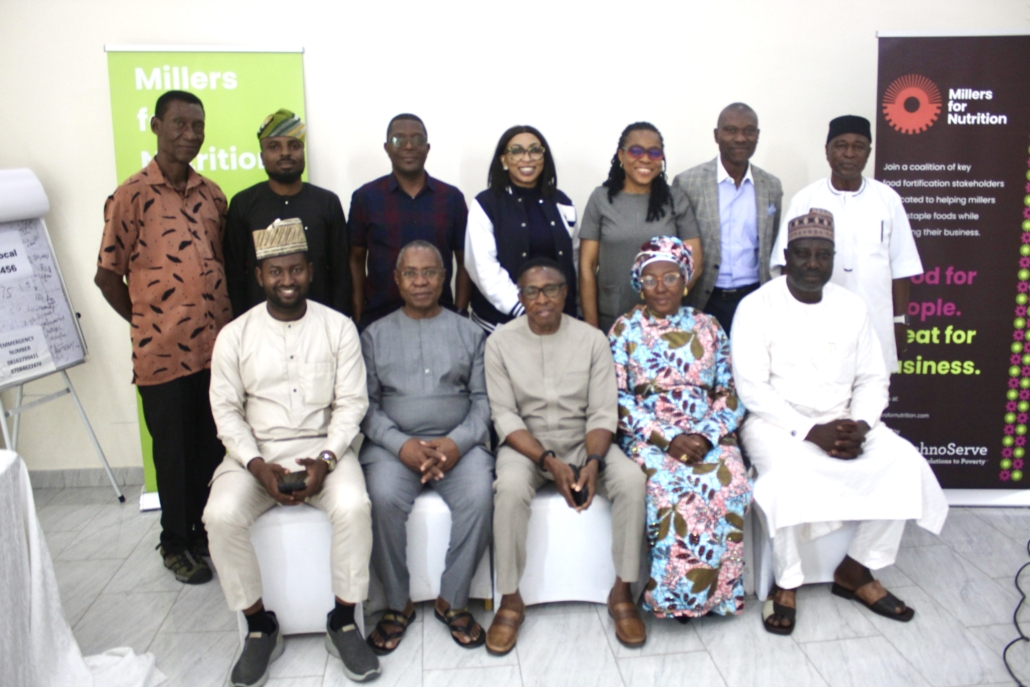
At the closed-door executive roundtable, attendees included (Sitting L-R) Alh.Umar Madugu, deputy
chairman, Gombe State Groundnut Oil MIllers Association; Mr Sam Onukwue, GMD/CEO Mega Capital;
Cletus Chibuko, managing director of Edcel Ltd; Mrs.Talatu Jubril, lawyer, Yahdima Chambers; Sani Yau,
chairman, Gombe State Oil MIllers Association;
(Standing L-R) Cyprain C. Ugwejeh, Project Consultant; Babajide Ogunleye, Food Fortification Specialist
at TechnoServe; Olusola Showunmi, Senior Food Fortification Specialist at TechnoServe; Ayodele Tella,
Senior Program Manager, TechnoServe; Ifunanya Aginam, business development / account manager at
BASF; Uche Emmanuel, managing director at Mega Capital; Captain Peter Ngere, Director, Mega Capital.

May 2025 Miller of the Month is Abhishek Agarwal, Director of Shyamatara Rice Mills, India

May 2025 Miller of the Month: Abhishek Agarwal – Director of Shyamatara Rice Mills, India

1.  What inspired Shyamatara Rice Mills to venture into fortified rice production?

Shyamatara Rice Mills (P) Limited has played a pivotal role in improving the nutrition space of the people of West Bengal since 2005. Our family being present in the rice milling industry for the past 47 years has adopted and understood the needs of the market as and when the market demanded a change. With the food quality being deteriorated day by day, our focus changed to how we can provide nutrition through supply of fortified rice in the open market in West Bengal in the variant which is most consumed by the people of Eastern part of India.   

Our May 2025 Miller of the Month is Abhishek Agarwal,  Director of Shyamatara Rice Mills, India

2.  Can you share the challenges and successes you’ve faced during the launch of Bengal Crown Fortified Rice?

Our venture into fortified rice in West Bengal was a decision made consciously over the past 6 months after realizing the true need of the product in the open market. Being one of the first movers in West Bengal for this product, our main challenge was to ensure our marketing is such that we are able to convince the consumers about the importance of Fortified Rice and how just by adding it in your daily diet, there is a stark difference in their vitamins, zinc and Iron Levels which are crucial in the overall health for a human.

3.  How do you see fortified rice contributing to addressing micronutrient deficiencies in West Bengal?

Fortified Rice has already been quite a success story for the Indian Government ever since it has been implemented in the rice supplied for the Public Distribution System. Almost 65% Indians consume PDS supplied fortified rice in India. Our focus is on the remaining 35%. Almost 1/3rd of the population being exposed to malnutrition because of non consumption of fortified rice is a huge number. We can surely address low Iron and Vitamin levels strongly as it is the most economical way of getting a balanced diet across all socio-economic groups.

4.  What role do you think millers play in ensuring nutrition security, and how can we collaborate further?

Millers play a very crucial role in ensuring nutrition security for all as the Government has trusted the milling stage in the whole cycle to ensure true and fair fortification of staples. We as millers have to ensure we are able to keep the Government’s trust. In the future, we can collaborate with NGOs, Government agencies and industrial bodies to ensure fortification is understood and accepted by every consumer.                                                       

5.  Looking ahead, what are your plans for expanding fortified rice production and distribution?

We have already introduced fortified rice across most varieties of non basmati rice processed by us and most of the products are available on E- commerce platforms like Amazon and Flipkart. Going forward, we envision that fortified rice will be accepted at such levels in the open market that there will be only fortified rice production and distribution across all variants processed by us.

 6.  Any message for our readers, particularly those interested in nutrition and fortification?

The whole community collectively has to ensure acceptability of fortified staples across all consumer levels. Consumer awareness holds the key to ensure success of this dietary change in our daily lives which we want to bring. There is a vey big opportunity for fortified staples if marketed well and accepted by consumers. Entry of more and established players will only help in achieving the motto of bringing fortified food in every plate across the globe. 

Sri Padmalaya Rice Mill Launches ‘Aarogya’ Fortified Rice at Kakinada Round Table; Momentum Builds for Fortified Staples Across India

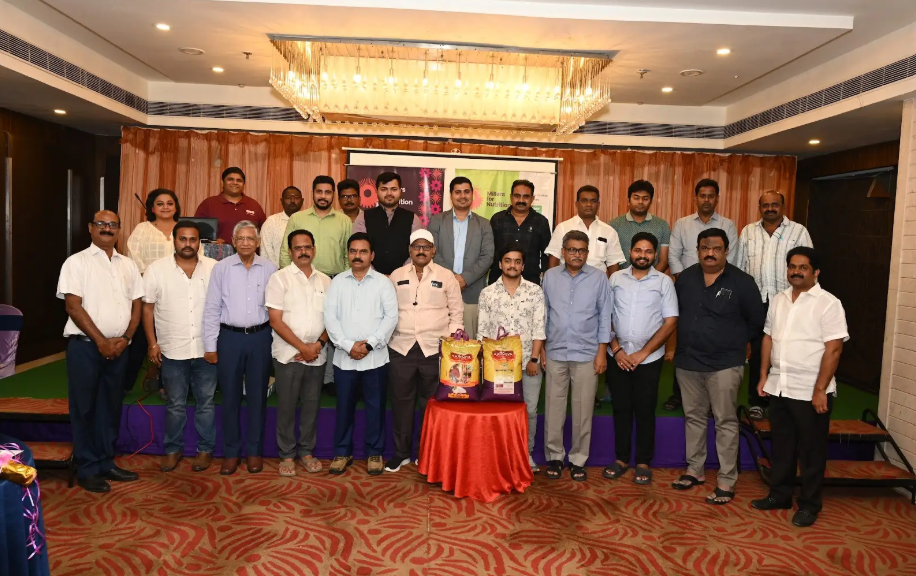
Kakinada, Andhra Pradesh — In a significant step toward improving nutritional security, Sri Padmalaya Rice Mill unveiled its new fortified rice brand, Aarogya, during the Rice Millers Round Table event held recently in Kakinada. The fortified rice is enriched with five essential micronutrients, aligning with India’s broader public health push to combat malnutrition. The millers roundtable brought together key stakeholders—including rice millers, nutrition experts, and government representatives—to assess the current landscape of rice fortification, address market challenges, and explore strategic opportunities for growth in the region.

Interest in fortified staples continues to grow, with several millers from Kolkata also announcing plans to introduce their own fortified rice and wheat flour brands in the near future. This marks a significant shift in the grain processing industry, as fortified foods gain traction not just in Andhra Pradesh but across the country. Keynote speakers at the event included Dr. Rajan Sankar, Senior Advisor at TechnoServe, and Judy Boucek, Nutrition Improvement Lead at dsm-firmenich. Both shared valuable insights on the science and policy of rice fortification, and emphasized its role in addressing micronutrient deficiencies among large segments of the population. “With fortified staples, we’re not just processing food—we’re delivering better health to millions,” said Dr. Sankar. “It’s encouraging to see millers stepping up and becoming partners in this important mission.”

As India accelerates its efforts to scale up rice fortification, initiatives like Aarogya serve as promising examples of how private sector players can contribute to national nutrition goals.

Stay tuned—more fortified brands are on the horizon as India’s staple food landscape continues to evolve toward better health and well-being for all.

April 2025 Miller of Month: Stanley Oluwasanmi Gbelee, Quality Assurance Manager, Eagle Flour Mills, Nigeria

We’re proud to highlight Stanley Oluwasanmi Gbelee, Quality Assurance Manager at Eagle Flour Mills, Nigeria, as our Miller of the Month. Stanley and his team were recognized at the 2024 Micronutrient Fortification Index (MFI) Awards, where Eagle Flour Mills was celebrated for producing a top five fortified flour brand (Eagle Wheat Flour) in Nigeria.

What is your commitment to Food Fortification?
My commitment to Food Fortification is a hundred percent. I believe it is my responsibility to ensure that the flour leaving our factory is adequately fortified, thereby helping to reduce micronutrient deficiencies among Nigerians. I have been a champion of food fortification for many years, even before it became mandatory in Nigeria.

Why did you decide to join Millers for Nutrition?
As a Quality Assurance Manager, I understand that continuous learning is essential to ensure adequately fortified products. Joining Millers for Nutrition was an opportunity to strengthen my expertise. The platform equips me with up-to-date knowledge and best practices, enabling me to perform my role more effectively. Every training, resource, and discussion helps me improve our fortification processes and product quality.

What is your proudest achievement?
We take great pride in customer satisfaction. My greatest professional joy comes from knowing that customers trust and enjoy Eagle Flour Mills’ products. When we visit markets and receive positive feedback, or when our customer care line receives no complaints or returns, it confirms we are on the right track. This achievement reflects not just our quality production, but also the positive impact of fortified products on households across Nigeria.

What would you tell other millers about joining Millers for Nutrition?
Being part of Millers for Nutrition makes it easier to improve and maintain consistency in fortification. This helps sustain and strengthen fortification efforts, ensuring consistency. Furthermore, through the Micronutrient Fortification Index, Millers for Nutrition recognizes and celebrates millers who work diligently to make a difference. I strongly encourage other millers to become members to enjoy all these benefits and more.

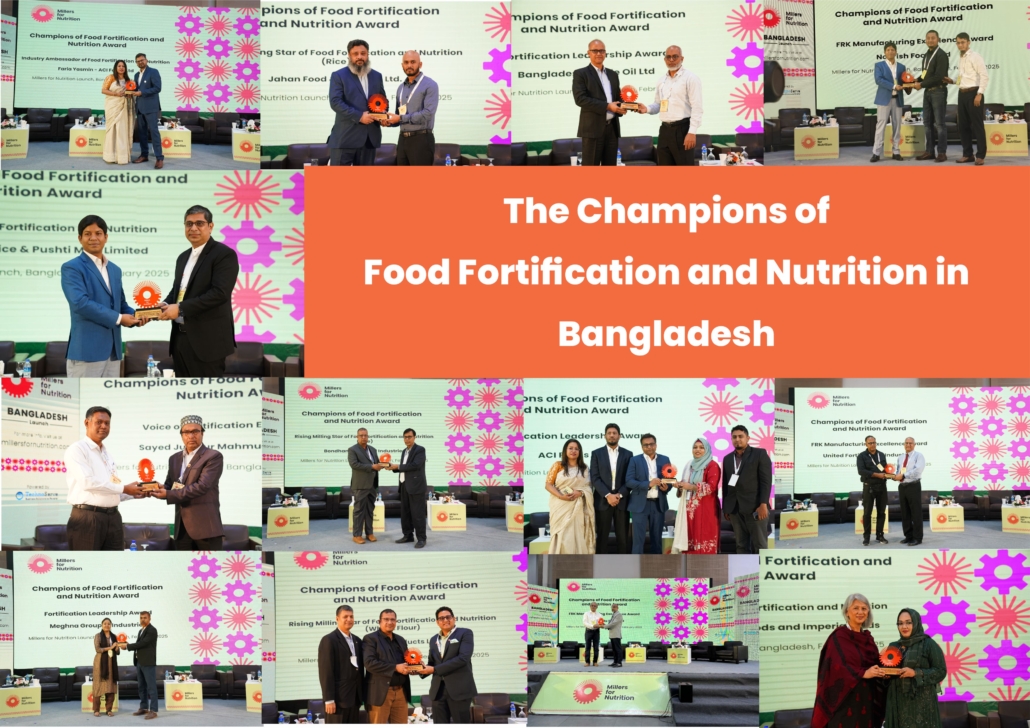
Millers for Nutrition Launches in Bangladesh, Pledges to Improve Nutrition Landscape

Millers for Nutrition Bangladesh recently launched at the International Convention City Bashundhara (ICCB) in Dhaka. The event drew significant attention from the miller community, development sector, industry associations, and prominent industry leaders.

Chief Guest, Mr. S M Ferdous Alam, Director General of Bangladesh Standards & Testing Institution (BSTI) in his address stressed the importance of food fortification in improving public health and encouraged stakeholders to join Millers for Nutrition to help to strengthen “South-South Collaboration” amongst the Millers of Asia and Africa. The keynote address was delivered by Dr. Md. Taherul Islam Khan, Director of Bangladesh National Nutrition Council (BNNC). He highlighted the significance of staple food fortification in addressing malnutrition.

A panel discussion: “Fortified Futures: Unlocking the Potential of Staple Food Fortification in Bangladesh” featured industry experts, including Faria Yasmin, Sayed Julfiqur Mahmud, Mahbub Baset and Prof Dr. Gulzarul Aziz. The discussion, moderated by Dr. SM Mustafizur Rahman, highlighted several key challenges and solutions for promoting fortified staples in Bangladesh, including raising awareness about fortified rice and flour, addressing misconceptions about their “naturalness” and safety as well as improving the affordability of fortified foods

Panelists emphasized the need for mandatory rice fortification, government incentives, and collaborations with global organizations to support millers.The discussion also included the importance of ensuring nutrient stability and bioavailability in fortified foods, reducing testing lead times, and exploring local premix production to increase affordability and efficiency.

The event culminated with the announcement of the Champions of Food Fortification and Nutrition Awards, recognizing millers and brands driving positive change in India’s nutrition landscape. Awardees included:

Industry Ambassador of Food Fortification and Nutrition: Faria Yasmin, Chief Business Officer, ACI Foods Ltd.

Voice of Fortification Excellence: Sayed Julfiqur Mahmud, President, BFRMA

Woman Leader in Food Fortification and Nutrition: Dr. Naznin Afroz, Chairman, NK Foods and Proprietor, Imperia Foods

Champion Mill of Fortification and Nutrition: Ruposhi Flour, Rice & Pushti Mills Limited

Fortification Leadership Award: ACI Foods Ltd, Meghna Group of Industries, and Bangladesh Edible Oil Ltd.

Rising Milling Star of Food Fortification and Nutrition: IFAD Multi Products Ltd (Wheat Flour), Jahan Food & Agro Pvt. Ltd (Rice), and Bondhan Agro Food Industries (Rice)

FRK Manufacturing Excellence Award: United Fortification Industries, Kamal Auto Rice Mill, and Nourish Foods Ltd.

New Boogaloo’s Breakthrough: Mastering Fortification and Expanding Markets

For New Boogaloo Limited of Tanzania, fortifying maize flour was initially a struggle. Despite having the right machinery and fortificants, the company faced challenges meeting rigorous quality benchmarks the Tanzania Bureau of Standards set.

“It was hectic and frustrating,” says Production Manager Secilia Katisha. “We had all the components, but the challenges persisted.”

The turning point came when Secilia attended a sectorwide training organized by Millers for Nutrition that focused on helping millers fortify staple foods like maize flour, wheat flour and edible oil. From the training, New Boogaloo was connected to industry experts and received targeted technical assistance.  

“The assistance from Millers for Nutrition helped us a lot,” Secilia says. “We have a better understanding of the mixing process and since then, our products have successfully met all quality benchmarks.”  

The impact of the technical assistance, including approval from the Tanzania Bureau of Standards, allowed the company to access new markets in Dar es Salaam and Mwanza, reaching more customers with fortified maize flour. 

The company also realized significant savings. 

“We had spent a lot of money on sampling, recruiting and training technicians and testing,” Secilia says. “Now, we are not only saving money but also working in peace. The training saved us time, money and a lot of stress.”  

Beyond the financial benefits, employees gained a stronger sense of control over operations. “We are no longer worried about failing tests,” Secilia says. “If an issue arises, we know how to troubleshoot and solve it. Our employees are more confident, and production runs smoothly without interruptions.”  

Secilia’s advice to other millers is clear: “Don’t waste time complaining or guessing what went wrong. Reach out to Millers for Nutrition for support. If I had known earlier, I could have solved our challenges much sooner.”

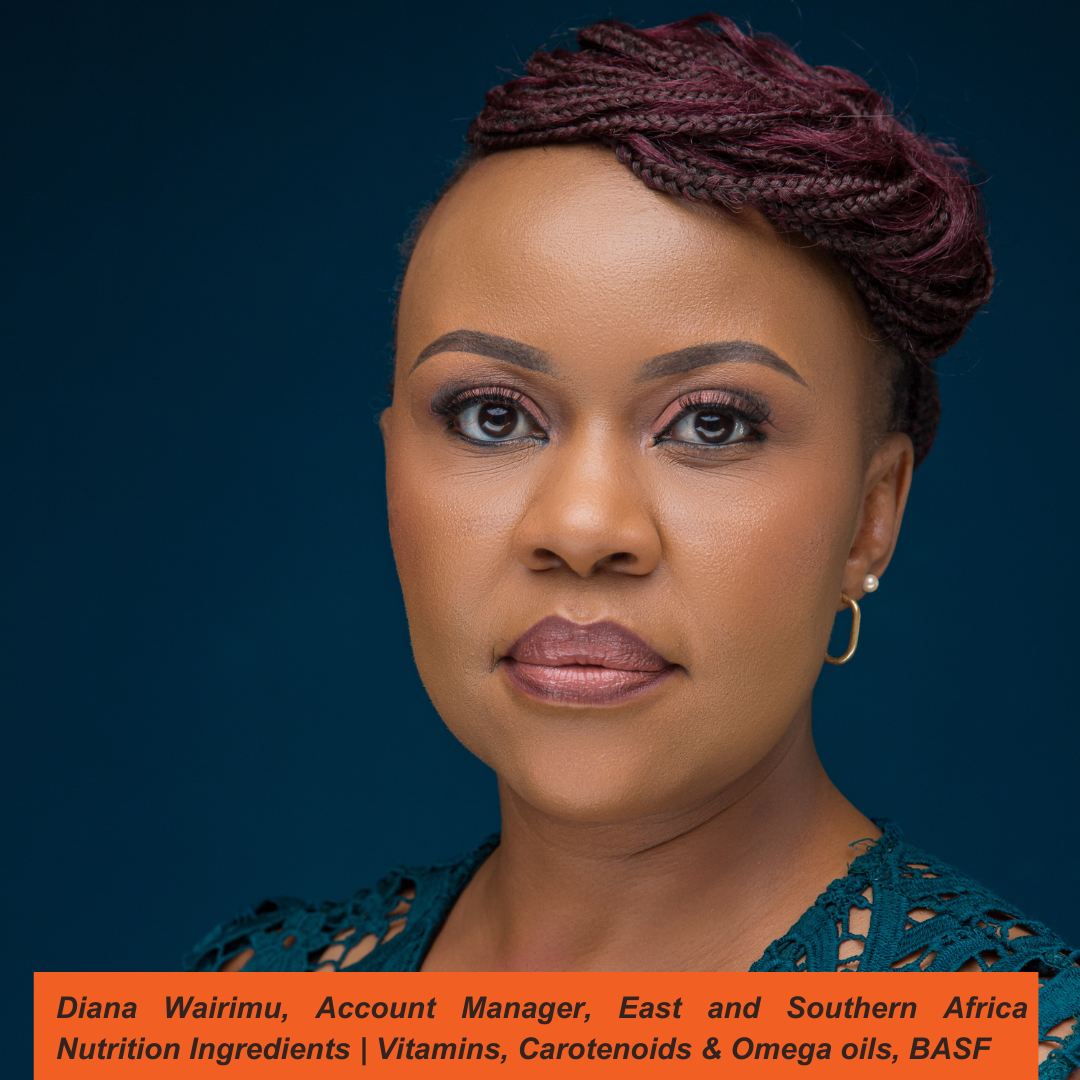
Strategic Fortification Partner Spotlight: BASF

Strategic Fortification Partner, Diana Wairimu, Account Manager at BASF and food fortification advocate, talks about her inspiration, the importance of supporting millers, and how collaboration strengthens food systems.


What inspired you to join the food fortification journey?

My inspiration came from a combination of factors, including a commitment to public health, global nutrition goals, social impact, technological advancements, and the potential for collaboration.

Public Health: Food fortification is a cost-effective and sustainable strategy to improve public health by addressing micronutrient deficiencies. My inspiration came from a desire to combat malnutrition and its adverse health consequences, such as stunting, birth defects, and impaired cognitive development.

Global Nutrition Goals: Organizations like the World Health Organization and the United Nations have set global nutrition goals that include reducing malnutrition and eliminating vitamin and mineral deficiencies. My desire to join the food fortification journey aligned with these goals and provides an opportunity to contribute to global nutrition efforts.

Social Impact: Food fortification has the potential to make a significant positive impact on vulnerable populations, particularly in low-income countries. My inspiration to join the journey stemmed from the desire to contribute to the well-being of those who are most in need.

Can you share a specific example of how you’ve seen knowledge transform a miller’s operations?

One specific example of how QA/QC knowledge transformed an edible oil miller’s operations in food fortification is when the miller implemented a comprehensive quality control system to ensure the proper fortification of their edible oils with essential vitamins and minerals. Previously, the miller had no standardized process in place, leading to inconsistent fortification levels and potential health risks. With the implementation of QA/QC knowledge, the miller was able to establish strict testing protocols, monitor fortification levels throughout the production process, and verify the accuracy of the fortification equipment. This not only ensured the nutritional quality of their products but also improved consumer trust and compliance with food regulations.

What unique value did you find in being a part of Millers for Nutrition?

Collaboration and knowledge sharing: Being a part of this initiative allows millers to collaborate with other stakeholders, such as government agencies, NGOs, and public health organizations. This collaboration fosters knowledge sharing, best practices, and ongoing research and development in the field of food fortification in an environment where all stakeholders can participate freely.

Tag Archive for: Millers for Nutrition

Nothing Found

Sorry, no posts matched your criteria