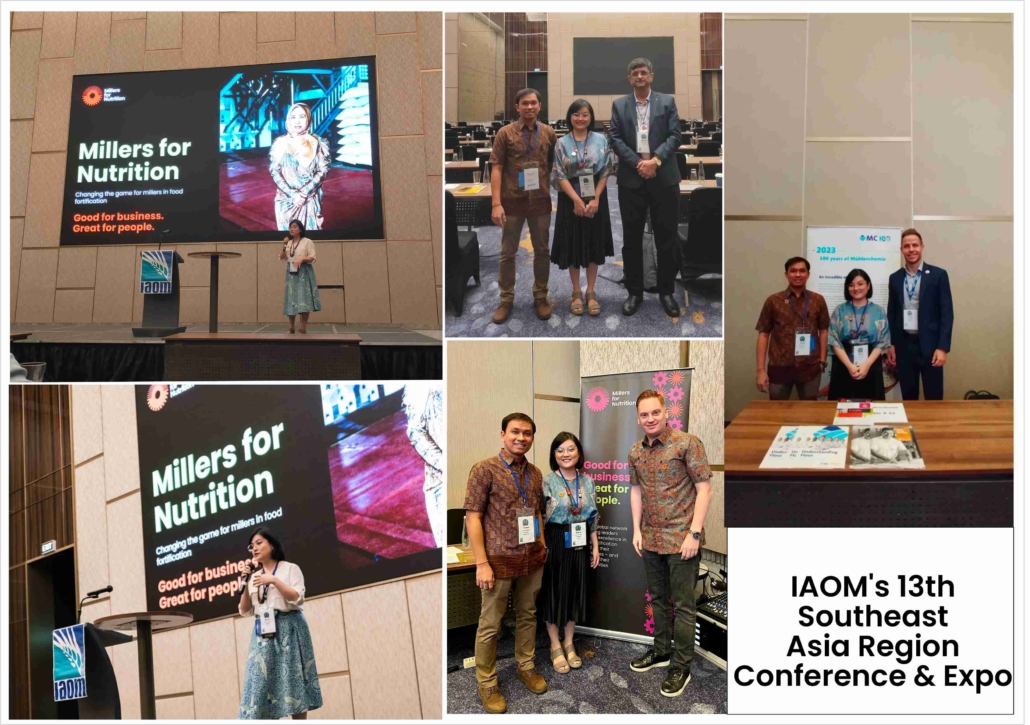
Indonesia Program Manager Evelyn Djuwidja recently presented at IAOM’s 13th Southeast Asia Region Conference & Expo in Surabaya. This conference brought together experts in wheat flour milling, from manufacturing to QA/QC, testing, fortification and the latest innovations in the industry.
Evelyn provided information on the good work being done by the Millers for Nutrition coalition and its mission to improve nutrition to 1 billion people by 2026.
https://millersfornutrition.com/wp-content/uploads/2024/11/IOAM-1-scaled.jpg18012560Namrata Kainturahttps://millersfornutrition.com/wp-content/uploads/2023/12/Millers-For-Nutrition_Core-Logo_Orange-White_RGB-2.svgNamrata Kaintura2024-11-21 13:23:192024-12-03 23:28:26Millers for Nutrition at IAOM’s 13th Southeast Asia Region Conference & Expo in Surabaya, Indonesia.
Bio Analyt Founder Florian Schweigert (left) presents an award to Rahat Agarwal.
November 2024 Miller of Month: Rahat Agarwal, Director, Fort Fit Foods Pvt. Ltd., India
Winner: Rising Milling Star of Food Fortification and Nutrition (Rice) at the Champions of Food Fortification and Nutrition Awards by Millers for Nutrition
What motivated you to join the Millers for Nutrition Coalition?
My motivation to join the Millers for Nutrition coalition stemmed from a deep understanding of the challenges facing our sector. As a developing industry, we are at a pivotal moment where collaboration and support are crucial for navigating the complexities of food fortification. The coalition stands out as a unique platform that genuinely advocates for millers, addressing our concerns and recognizing our essential role in the supply chain. The opportunity to connect with like-minded professionals and share insights has been invaluable. Upon learning about the coalition’s initiatives, I felt an intrinsic motivation to contribute and be part of a community that prioritizes collective wellbeing and the nutritional health of families.
Tell us about your commitment to food fortification
Our commitment to food fortification was ignited in 2020 when we established this vital wing of our company. We encountered alarming data highlighting the prevalence of malnutrition both globally and in India, which was profoundly concerning. The implications of failing to address these nutritional deficiencies are significant, particularly for future generations. We believe that nutrition is foundational to a sustainable and thriving society. Fortification not only addresses immediate health needs but also serves as a strategic response to challenges such as crop failures exacerbated by climate change. At FORT-FIT FOODS, we are resolutely dedicated to advancing fortification efforts, recognizing it as a critical pathway to ensuring the nutritional wellbeing of communities.
How has the technical assistance from Millers for Nutrition impacted your business?
The technical assistance from Millers for Nutrition has had a transformative impact on our operations. We have successfully facilitated several technology transfers that have enhanced our production capabilities. Additionally, engaging with industry experts has provided us with invaluable insights and strategies to optimize our factory operations. This collaboration has not only improved our efficiency but has also fostered a culture of innovation within our team. Overall, the support from Millers for Nutrition has been instrumental in driving our growth and commitment to excellence in food fortification.
What advice do you have for other millers?
My advice to fellow millers is to view our industry not as a competitive race but as a collaborative marathon. Each of us operates at our own pace, but together, we can reach common goals. Embrace the importance of knowledge sharing; do not hesitate to ask questions or seek guidance when faced with challenges. The insights gained from others can be a catalyst for growth and improvement. Remember, the only questions that go unanswered are the ones we do not ask. By fostering an environment of openness and collaboration, we can collectively elevate our industry and make a lasting impact on food fortification.
https://millersfornutrition.com/wp-content/uploads/2024/11/Screenshot-2024-12-06-at-1.59.11 PM.png8681472Namrata Kainturahttps://millersfornutrition.com/wp-content/uploads/2023/12/Millers-For-Nutrition_Core-Logo_Orange-White_RGB-2.svgNamrata Kaintura2024-11-19 15:15:192025-03-04 21:14:47November 2024 Miller of the Month: Rahat Agarwal, Fort Fit Foods Pvt. Ltd. of India
Golden Africa Limited, a prominent player in Kenya’s edible oil and fats industry, recently joined Millers for Nutrition. The company is known for their vegetable oils and cooking fats under the Pike and Avena brands.The company is working towards FSSC 22000 certification, a globally recognized food safety management system. Achieving this certification, would demonstrate Golden Africa Limited’s commitment to implementing and maintaining the highest standards of food safety.
By fortifying their range of edible oils and fats, Golden Africa Limited is set to play a pivotal role in improving public health outcomes by ensuring the Kenyans using their products are eating adequately fortified cooking oil.
https://millersfornutrition.com/wp-content/uploads/2024/11/Golden-Africa.jpg421960Rue Mohamedhttps://millersfornutrition.com/wp-content/uploads/2023/12/Millers-For-Nutrition_Core-Logo_Orange-White_RGB-2.svgRue Mohamed2024-11-15 15:27:092024-11-15 15:27:13Welcome Golden Africa Limited!
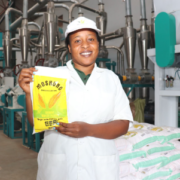
Moshono Millers, a leading maize flour miller in Tanzania, sought help solving operational challenges. By partnering with Millers for Nutrition, the facility not only resolved critical production issues but also enhanced its market footprint and community role.
Through targeted technical support, Moshono Millers was able to replace the malfunctioning dosifier and work with SANKU to install a new dosifier with advanced vibration technology. The upgrade boosted production from two to 10 tonnes per day.
“Our operational turnaround and efficiency has significantly driven business growth, expanding our market share from 50% to over 70% of our output”, said Mary Mongela, Quality Control Manager. “With this enhanced production, we’ve secured high-value clients like the TBS and the Tanzanian military, tripling their monthly orders from between 50 – 100 to 200 bags. This underscores the crucial role of targeted technical investments in boosting our market competitiveness.”
Beyond business metrics, Moshono Millers has been involved with behavior change communication and advocacy at the community level educating community members on the value of consistently consuming fortified flour. This dual focus on business growth and social responsibility illustrates the broader impact of strategic operational improvements.
“I never thought that I would become a food fortification ambassador,” said Mongela. “When we are out for sales, community members often ask why fortification is important as there has been a lot of misinformation. As community members seek clarity, there’s a growing need for educational support. We look to Millers for Nutrition for training support to better equip our teams and address these vital questions.“
Moshono Millers’ journey underscores how strategic technical assistance can transform operational landscapes, drive substantial business growth and elevate community health standards. For industry leaders, this case study exemplifies the value of aligning business objectives with community needs, promoting a holistic approach to sustainable growth and leadership in fortified nutrition advocacy. “I encourage all millers to become members of Millers for Nutrition. The support and technical assistance we received were pivotal in overcoming our challenges,” said Mongela.
https://millersfornutrition.com/wp-content/uploads/2024/11/Moshono-Millers.png301447Rue Mohamedhttps://millersfornutrition.com/wp-content/uploads/2023/12/Millers-For-Nutrition_Core-Logo_Orange-White_RGB-2.svgRue Mohamed2024-11-15 15:23:402024-11-15 15:24:22Technical Assistance Success: Moshono Millers, Tanzania
Rice millers in Kano recently participated in an intensive four-day technical training program that aimed to reshape Nigeria’s rice fortification landscape. The comprehensive workshop put together by Millers for Nutrition in collaboration with Strategic Fortification Partner dsm-firmenich, local technical partner Bühler Group, and fortification ecosystem partners World Food Programme and Partners in Food Solutions, delivered advanced insights into rice mill operations and fortification techniques.
The training brought together Production and Quality Managers, equipping them with practical skills to enhance their milling operations and implement effective fortification processes. Through hands-on sessions and expert-led discussions, participants gained deep insights into modern milling practices and nutrition enhancement strategies.
https://millersfornutrition.com/wp-content/uploads/2024/11/Nigeria-Rice-Fortification.png8841916Rue Mohamedhttps://millersfornutrition.com/wp-content/uploads/2023/12/Millers-For-Nutrition_Core-Logo_Orange-White_RGB-2.svgRue Mohamed2024-11-15 15:20:162024-11-15 15:20:19Transforming the Rice Sector in Nigeria
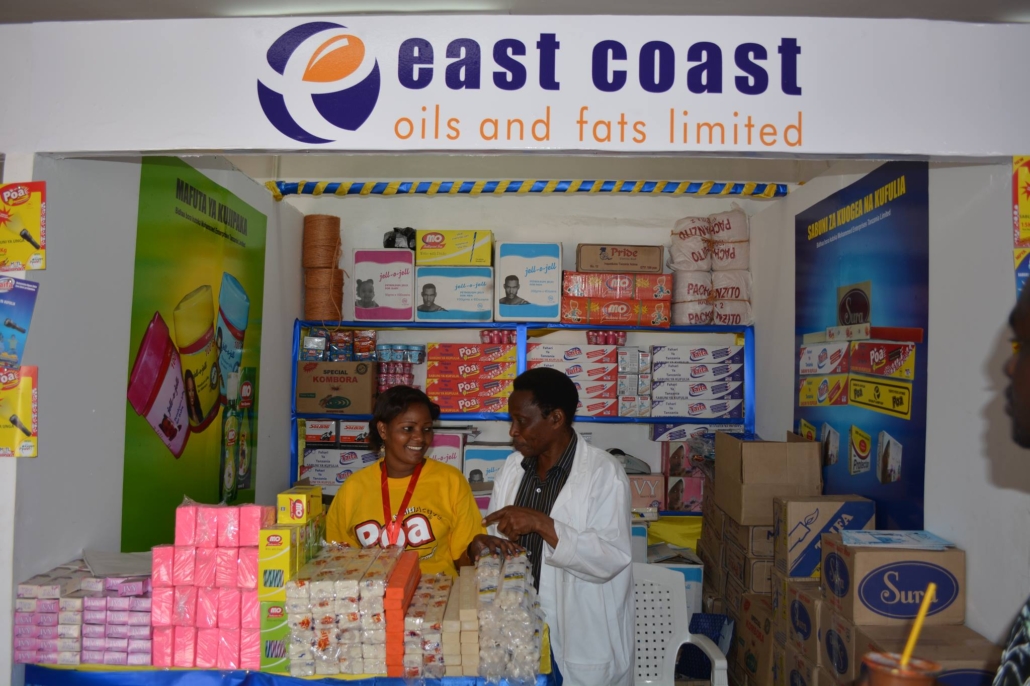
We are thrilled to announce East Coast Fats and Oil Ltd, in Tanzania , recently joined Millers for Nutrition. This collaboration marks a significant step toward enhancing quality assurance in vitamin A fortification.
Recently, East Coast Fats and Oils and Millers for Nutrition sampled the vitamin A premix for quality testing – a significant step in addressing fortification challenges. The data obtained from these tests will play a crucial role in refining the fortification processes, ensuring that products comply with both national and international nutrition standards. Millers for Nutrition is dedicated to supporting millers in their effort to improve nutrition for Tanzanians. We invite all millers to join. Learn more at www.millersfornutrition.com
https://millersfornutrition.com/wp-content/uploads/2023/12/Millers-For-Nutrition_Core-Logo_Orange-White_RGB-2.svg00Rue Mohamedhttps://millersfornutrition.com/wp-content/uploads/2023/12/Millers-For-Nutrition_Core-Logo_Orange-White_RGB-2.svgRue Mohamed2024-10-15 13:40:322024-11-07 13:41:47Millers for Nutrition adds India to effort
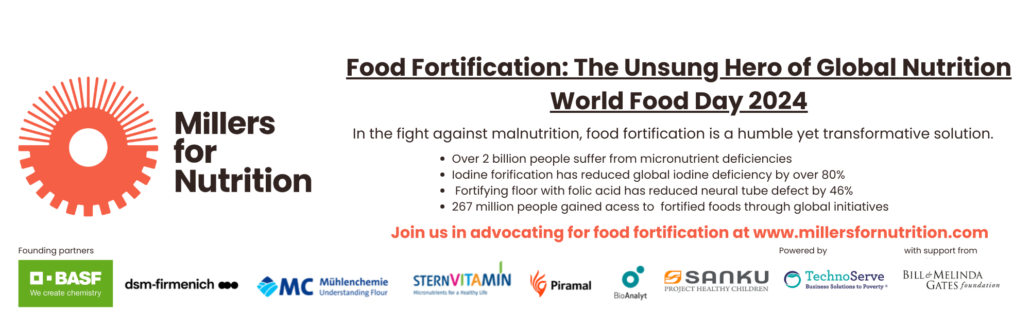
In the fight against malnutrition, there is a humble, yet transformative solution that has quietly improved the health of billions around the world: food fortification. This simple intervention—adding essential vitamins and minerals to staple foods—has made a profound impact on global health, yet it often goes unnoticed. As we celebrate World Food Day 2024, it’s time to shine a spotlight on this unsung hero, whose benefits are more relevant today than ever before.
Food fortification isn’t just about nutrition—it’s about improving lives, economies, and the future of our world. It’s the reason iodine deficiency disorders have nearly disappeared, why devastating diseases like beriberi and pellagra are now rare, and why the rates of neural tube defects, a major cause of infant mortality, have plummeted. This simple, cost-effective solution has saved millions of lives and has quietly been a cornerstone of public health for decades. Yet, in global conversations on nutrition, it rarely takes center stage.
A Silent, Global Crisis
Right now, over 2 billion people—almost one in three—suffer from “hidden hunger.” This isn’t about empty stomachs; it’s about the lack of essential nutrients like iron, iodine, vitamin A, and folic acid, which are crucial for healthy development. The consequences are severe: stunted growth, weakened immune systems, cognitive impairments, and even death. For example, iron deficiency affects 1.6 billion people and contributes to 20% of maternal deaths worldwide. This is more than just a health issue—it’s an economic one too. According to the World Bank, micronutrient deficiencies cost developing countries up to $3 billion annually in lost productivity and healthcare expenses.
The Power of Fortification: Proven Results
Food fortification is one of the most powerful tools in the fight against hidden hunger. Take iodized salt, for example. Since its introduction in the 1990s, iodine fortification has reduced global iodine deficiency by over 80%, virtually eliminating iodine deficiency disorders like goiter. Nearly 90% of the world’s population now consumes iodized salt, saving millions of lives and improving cognitive development, especially in children.
Similarly, fortifying wheat and maize flour with folic acid has been a game-changer in the fight against birth defects. In countries with mandatory fortification, neural tube defects—such as spina bifida—have dropped by 46%. In the U.S. alone, fortification has prevented 1,300 neural tube defect-affected pregnancies every year since 1998. These numbers aren’t just statistics—they represent lives changed and futures transformed.
In Zambia, where flour is fortified with iron, anemia in women of reproductive age dropped by 10% in just a few years. The impact is clear: fortification works, it’s affordable, and it reaches people where they are—no drastic changes in behavior or diet needed.
A Changing World, A Growing Need
The world is changing fast, and with it, so are people’s diets. By 2050, 68% of the global population will live in urban areas, up from just 30% in 1950. This shift toward urban living is driving changes in food consumption, with more people relying on processed and packaged foods. While these foods are convenient, they often lack the essential nutrients found in traditional diets. In sub-Saharan Africa, urbanization is leading to increased consumption of refined grains, stripped of nutrients during processing. The result? A growing nutritional gap, one that food fortification is perfectly poised to fill.
The Global Nutrition Report of 2021 warns that in low- and middle-income countries, diets are becoming increasingly energy-dense but nutrient-poor, contributing to rising obesity and non-communicable diseases like diabetes. In these environments, fortifying staple foods with critical nutrients like iron, vitamin A, and folic acid can address the double burden of malnutrition—undernutrition and obesity—at the same time. Food fortification offers a pragmatic solution that can adapt to these changing realities without overhauling dietary habits.
A Pragmatic Approach: TechnoServe’s Millers for Nutrition
So, how do we make food fortification even more effective? By working with the people who make the food we eat. That’s exactly what TechnoServe’s Millers for Nutrition initiative does—engage with private-sector millers, the unsung heroes who ensure that the food reaching millions of people is not just filling, but nutritious.
Unlike traditional approaches that focus on government regulations, TechnoServe’s strategy is simple but powerful: we give millers the tools, technical assistance, and training they need to voluntarily fortify their products. Our approach is pragmatic, scalable, and sustainable. By 2023, TechnoServe had partnered with 500 millers across Africa and Asia, impacting the nutrition of over 200 million people.
The initiative is driven by competition and innovation. For instance, in Kenya and Nigeria, TechnoServe introduced the Kenya Millers Fortification Index (KMFI) and the Micronutrient Fortification Index (MFI). These indices encourage millers to compete on quality and compliance. The result? A 40% improvement in fortification levels among participating millers in Kenya, ensuring that fortified products meet nutritional standards and reach those who need them most.
Scaling Up: The Future of Fortification
The successes seen in Kenya, Nigeria, Zambia, and other countries are just the beginning. More than 85 countries now have mandatory fortification programs, but billions of people—especially in low- and middle-income countries—still do not have consistent access to fortified foods. Scaling up fortification efforts, expanding access, and ensuring that fortified foods reach the most vulnerable populations is the next frontier.
On this World Food Day 2024, the message is clear: food fortification is a simple, effective solution that remains essential in the fight against malnutrition. As the world’s populations shift towards urban living and dietary patterns evolve, fortification is becoming more critical than ever before. Through initiatives like Millers for Nutrition, TechnoServe is showing how public-private collaboration can drive real, lasting change.
Together, we have the tools to build a healthier, more resilient world—one fortified grain at a time. Food fortification may be the unsung hero of global nutrition, but its power to improve lives is undeniable. Let’s make sure it gets the recognition it deserves as a cornerstone of our global strategy to end malnutrition. After all, sometimes the simplest solutions are the most powerful.
Source: Rizwuan Yusifali, Program Director, Inspiring Good Nutrition Initiative Through Enterprise (IGNITE)
https://millersfornutrition.com/wp-content/uploads/2024/10/Food-Fortification-The-Unsung-Hero-of-Global-Nutrition-2.png6002000Rue Mohamedhttps://millersfornutrition.com/wp-content/uploads/2023/12/Millers-For-Nutrition_Core-Logo_Orange-White_RGB-2.svgRue Mohamed2024-10-15 11:52:222024-10-15 12:02:07Food Fortification: The Unsung Hero of Global Nutrition – World Food Day 2024
October 2024 Miller of Month: Mombasa Maize Millers (Nakuru) Limited, Kenya
Food vehicle: Wheat Flour
Winner: Kenya Millers Fortification Index 4PG Award – Evidence Parity Award
Ezinah Bosibori Aroni, quality control officer at Mombasa, talks about the company’s commitment to fortification and experience with Millers for Nutrition.
Why are you a member of M4N? We joined Millers for Nutrition to learn food fortification standards and practices. The technical assistance and support have been valuable in improving our operations.
Tell us about your commitment to food fortification Our commitment is closely aligned with the Kenya Bureau of Standards (KEBS) compliance requirements. This dedication to quality and nutrition reinforces our position as a responsible miller within the Kenyan milling sector. We’re constantly working to enhance our fortification processes to ensure we deliver adequately fortified and nutritious products to our customers.
Ezinah Bosibori Aroni, quality control officer at Mombasa Maize Millers
How did the Millers for Nutrition training impact your business? We recently participated in comprehensive training programs supported by Millers for Nutrition, focusing on Good Manufacturing Practices (GMP) and Hazard Analysis and Critical Control Points (HACCP). These trainings have significantly impacted and improved our company operations and practices in several ways namely:
– We’ve developed Standard Operating Procedures (SOPs) that have streamlined our workflows, enhancing efficiency and clarity in roles and responsibilities.
– Our company has been recognized by the Nakuru County Health and Safety Department as a benchmark for GMP – safety and health standards.
– We’ve strengthened our rapport with customers by developing robust product recall procedures, ensuring trust and reliability in our products.
What advice do you have for other millers? I encourage millers to join the coalition and take advantage of training programs. The knowledge gained from these programs can significantly improve operations, food safety standards, and overall product quality. Additionally, implementing SOPs and working towards certifications like ISO can set them apart in the market and build customer trust.
https://millersfornutrition.com/wp-content/uploads/2024/10/mombasa-maize-millers-logo.png184346Alinehttps://millersfornutrition.com/wp-content/uploads/2023/12/Millers-For-Nutrition_Core-Logo_Orange-White_RGB-2.svgAline2024-10-01 21:41:002024-12-06 21:42:26October 2024 Miller of Month: Mombasa Maize Millers (Nakuru) Limited, Kenya
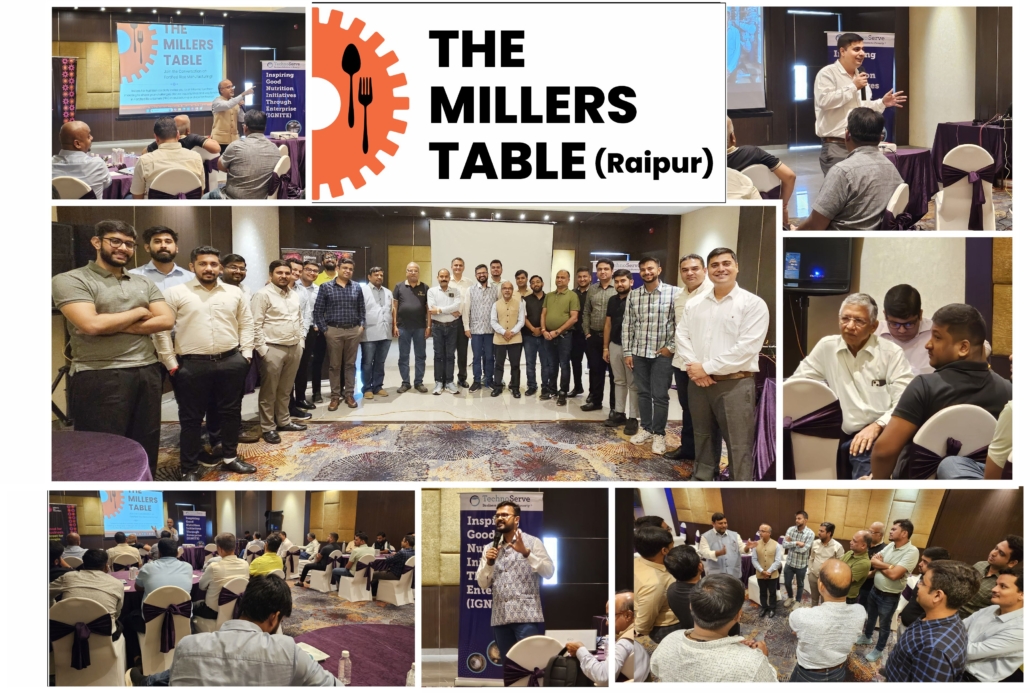
Millers for Nutrition recently hosted “The Millers Table” in Raipur, Chhattisgarh, bringing together millers and technical experts for an informal luncheon. The event aimed to facilitate open discussions on challenges, opportunities, and best practices in Fortified Rice Kernels (FRK) manufacturing and rice fortification.
Dr. Rajan Sankar, Senior Advisor – TechnoServe and Mr. Sridhar NB, Head – Business Development : Rice Fortification EMEA & South Asia DSM-Firmenich shared their valuable technical expertise on FRK manufacturing and rice fortification.
We’ll continue to host these casual gatherings to foster meaningful connections, knowledge sharing, and collective growth.
https://millersfornutrition.com/wp-content/uploads/2024/09/Millerstable-thumbnail-scaled.jpg14402560Namrata Kainturahttps://millersfornutrition.com/wp-content/uploads/2023/12/Millers-For-Nutrition_Core-Logo_Orange-White_RGB-2.svgNamrata Kaintura2024-09-29 17:02:062024-10-08 19:14:38India hosts The Millers Table
https://millersfornutrition.com/wp-content/uploads/2024/09/20240928131234-photo-1200X470.jpg4701058Namrata Kainturahttps://millersfornutrition.com/wp-content/uploads/2023/12/Millers-For-Nutrition_Core-Logo_Orange-White_RGB-2.svgNamrata Kaintura2024-09-28 10:59:042024-10-08 19:29:45Millers for Nutrition Launched in India to Help Millers Produce High-Quality, Nutritious Foods and Reduce Malnutrition