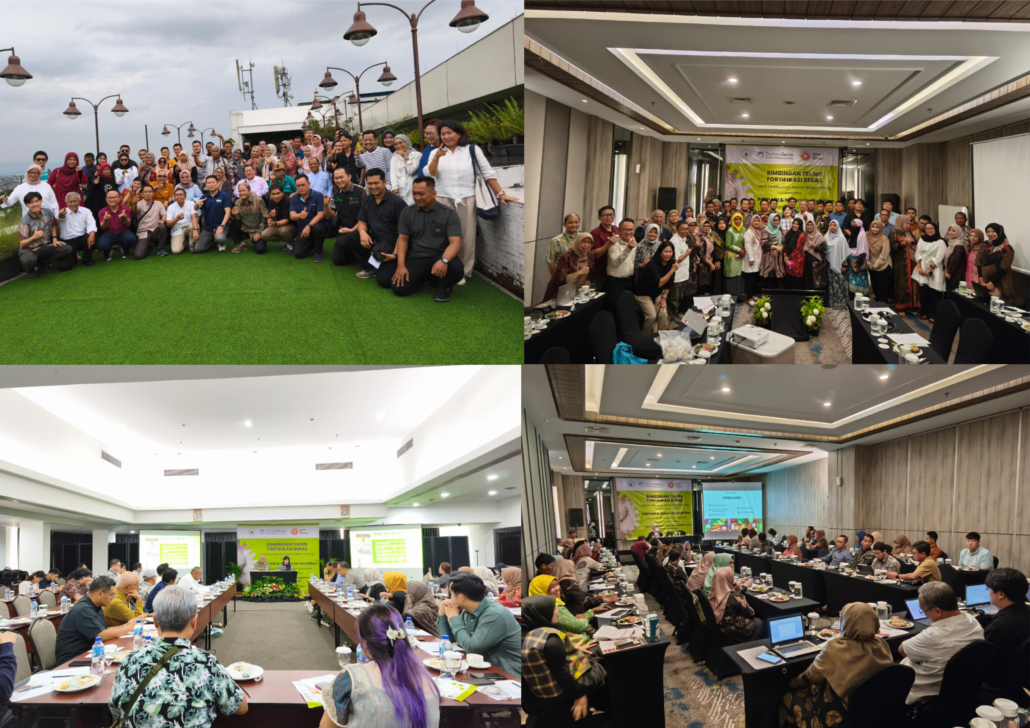
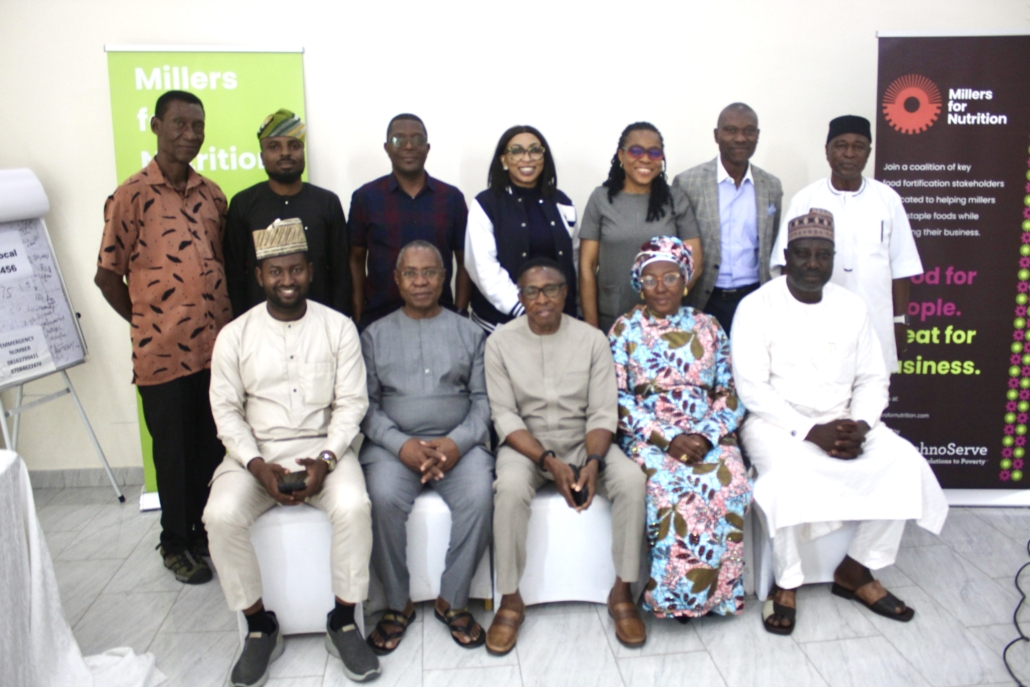
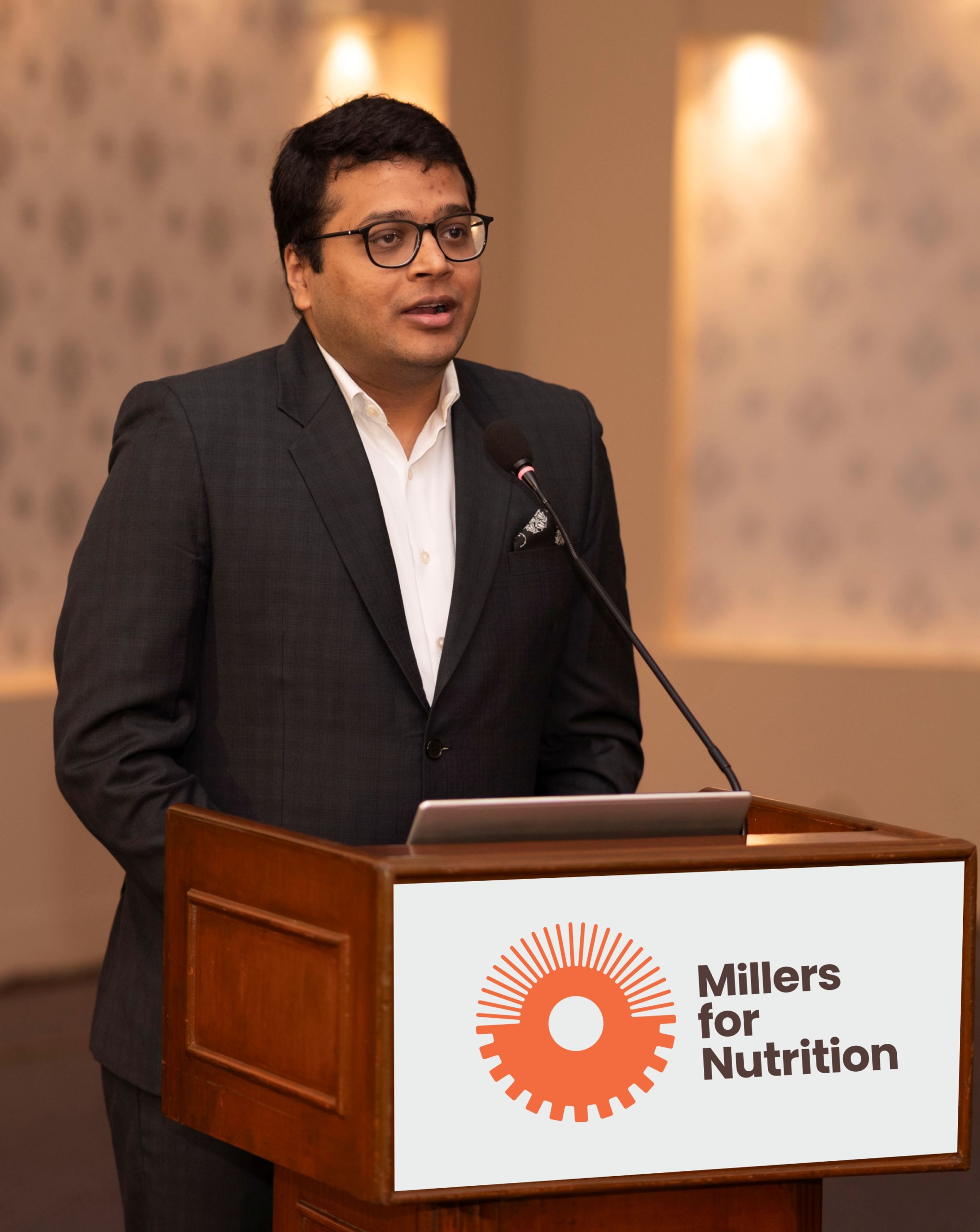
TechnoServe Indonesia, in partnership with Indonesia’s Rice Millers and Traders Association (PERPADI), successfully held three Sector-Wide Training (SWT) sessions on Rice Fortification.
These trainings took place in three cities—Yogyakarta, Malang, and Jakarta—over October and November 2025. The sessions covered technical materials on the production of fortified rice and fortified rice kernels (FRK), including premix, extrusion, blending processes, and Quality Assurance/Quality Control (QA/QC).
The training also highlighted the importance of rice fortification in Indonesia, existing regulations, and the business opportunities available to Indonesian millers.
Experts from Millers for Nutrition’s Strategic Fortification Partners (SFPs), including Buhler AG, dsm-firmenich, and Hexagon Nutrition, presented during the sessions. We also featured Indonesian fortified rice producers and FRK manufacturers who shared their experiences and challenges.
Over 100 millers participated in this training.
https://millersfornutrition.com/wp-content/uploads/2025/11/WhatsApp-Image-2025-11-28-at-15.36.55.jpeg9601280Namrata Kainturahttps://millersfornutrition.com/wp-content/uploads/2023/12/Millers-For-Nutrition_Core-Logo_Orange-White_RGB-2.svgNamrata Kaintura2025-11-28 13:24:382025-11-28 13:37:14Sector-Wide Training series in Indonesia on Rice Fortification
Millers for Nutrition organized an Awareness Seminar and Retailer Workshop on “Wheat Flour Fortification” in Valsad on November 20th, 2025 in association with NPB Agro Pvt. Ltd. and Valsad Rotary Rangers.
The seminar was graced by esteemed guests, including Dr. Rajkumar Dagadkhair (ARS), Joint Director, Food Safety and Standards Authority of India, as the Chief Guest, and Padmashree Dr. Yazdi Italia, Ex. Hon. Director, Go-NGO Sickle Cell Anaemia Control Program, Govt. of Gujarat, as the Guest of Honor. Dr. Nimisha Patel and Dr. Krunal Rana from Amit Hospitals Pvt. Ltd. also shared their valuable insights on the importance of food fortification.
Over 100 guests, including millers and retailers, attended the event, which aimed to build awareness about the benefits of wheat flour fortification. We are committed to working towards a healthier future for all and appreciate the support of our partners, speakers, and participants in making this event a success.
Key Highlights:
Awareness Seminar and Retailer Workshop on Wheat Flour Fortification
Esteemed guests from Food Safety and Standards Authority of India and healthcare sector
Over 100 attendees, including millers and retailers
Focus on building awareness about the importance of wheat flour fortification
Let’s work together towards a healthier future!
https://millersfornutrition.com/wp-content/uploads/2025/11/MDSL7653-scaled.jpg17072560Namrata Kainturahttps://millersfornutrition.com/wp-content/uploads/2023/12/Millers-For-Nutrition_Core-Logo_Orange-White_RGB-2.svgNamrata Kaintura2025-11-27 13:42:522025-11-27 13:43:05Empowering a Healthier Future through Wheat Flour Fortification!
Initiative brings together government, experts, and millers to strengthen nutrition security and expand access to fortified rice and wheat flour across the state
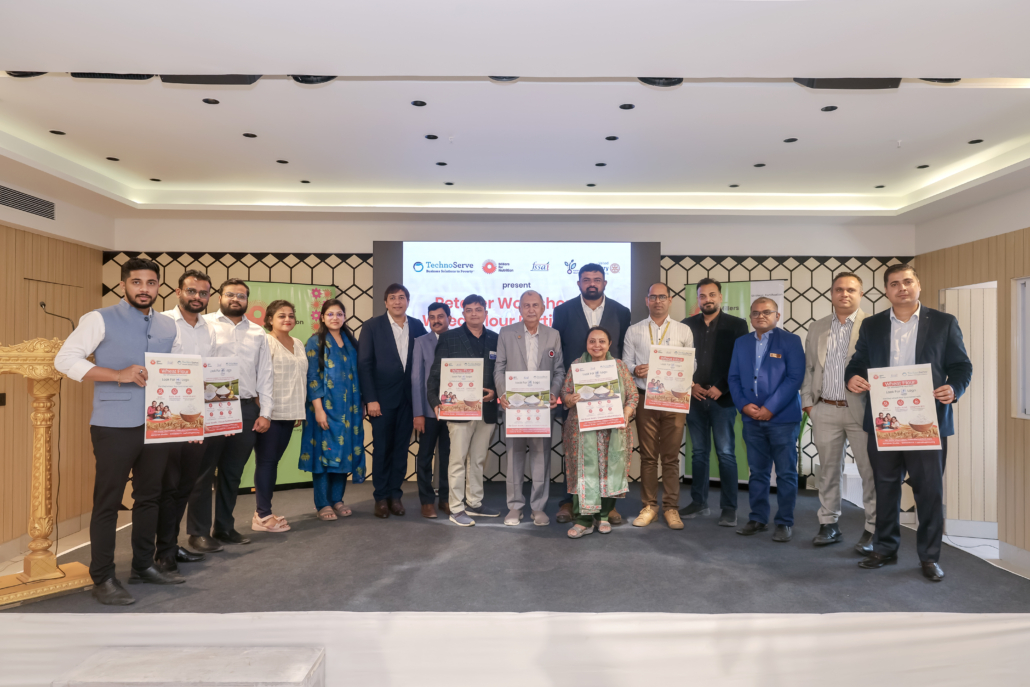
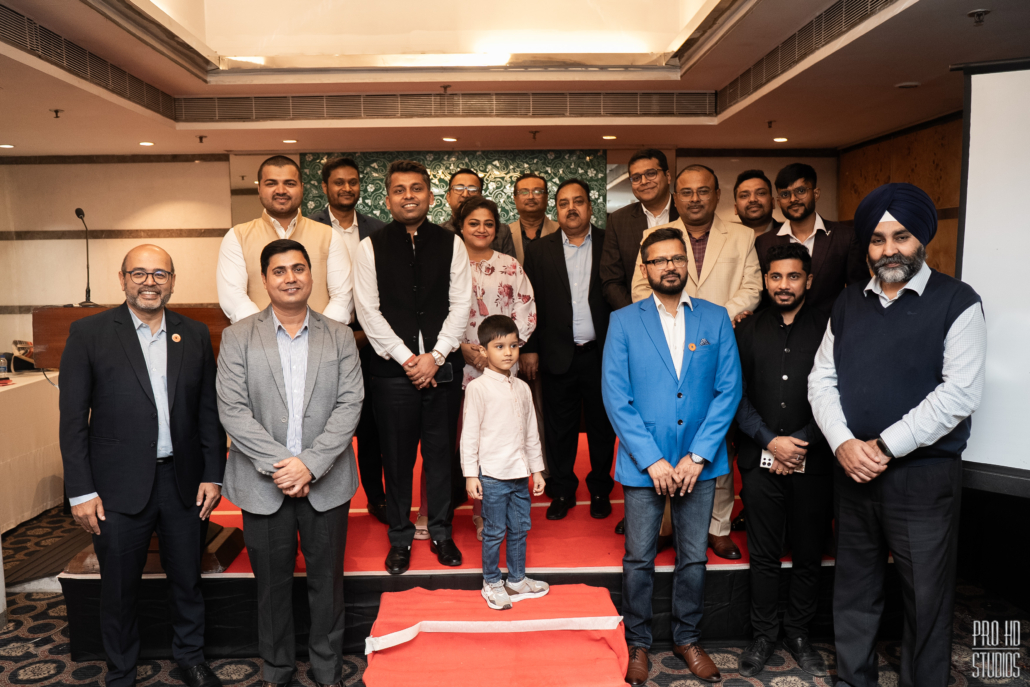
In a major step toward tackling malnutrition and hidden hunger, Millers for Nutrition, powered by TechnoServe, today brought together millers, nutrition experts, government officials, and industry leaders at Peerless Hotel, Esplanade, Kolkata for the launch of five new fortified food brands. In continuation of the series of national events themed “Unlocking Market Potential: Advancing Fortified Staple Foods” this event in Kolkata underscored how food fortification can significantly improve nutrition outcomes for families across the state.
Senior representatives from the Food and Civil Supplies Department – Government of West Bengal, FSSAI Eastern Region, and the Food Corporation of India attended the event.
Speaking at the event, Rizwan Yusufali, Global Program Director, Millers for Nutrition, said, “Malnutrition remains one of India’s most urgent public health concerns. Fortified staple foods offer a simple, proven way to improve nutrition at scale. The launch of five fortified brands in West Bengal shows what is possible when millers, government, and partners come together with a shared mission. This collaboration is a meaningful step toward building a healthier and more nutrition-secure West Bengal.”
“Strengthening food processing capabilities is essential for scaling fortification effectively. Today’s progress in West Bengal shows how the food processing industry can lead the way in ensuring that safe, fortified, and high-quality foods reach every household,” added Dominic Schofield, Senior Director – Agri Food Systems, TechnoServe.
At the event, five fortified brands were officially introduced to consumers in West Bengal. KPS Agro Products launched its KPS Kitchen King Fortified Atta, reaffirming its commitment to providing safe and nutritious wheat flour. Gitakshi Mercantile Pvt. Ltd. introduced Gitakshi Fortified Rice, developed through modern milling practices and guided by the Agarwal family’s focus on quality and nutrition. Jasmine Rice Mill unveiled KPS Kitchen King Fortified Rice, highlighting its efforts to improve access to healthier rice for local households. Hanumanta Food Products Pvt. Ltd. launched Hanumanta Fortified Atta, expanding its existing range of Atta, Maida, Sooji, and Pasta. Bagaria Foods LLP presented fortified Atta offerings under its well-known Royal brand, giving consumers more nutritious options in their daily food choices.
These launches are expected to play a vital role in addressing anaemia and micronutrient deficiencies, which have remained persistent challenges in the state, especially among women and children. The discussions held during the event also highlighted how fortified foods can strengthen school meal programs, public distribution systems, and the commercial retail market.
As West Bengal advances its fight against hidden hunger, Millers for Nutrition reaffirmed its commitment to supporting millers with technical assistance, training, and market guidance to make fortified foods a mainstream reality for every household.
https://millersfornutrition.com/wp-content/uploads/2025/11/Image-385-scaled.jpg17072560Namrata Kainturahttps://millersfornutrition.com/wp-content/uploads/2023/12/Millers-For-Nutrition_Core-Logo_Orange-White_RGB-2.svgNamrata Kaintura2025-11-27 13:35:222025-11-27 13:36:28West Bengal Steps Up in the Fight Against Malnutrition as Millers for Nutrition and Industry Leaders Launch Five New Fortified Food Brands in Kolkata
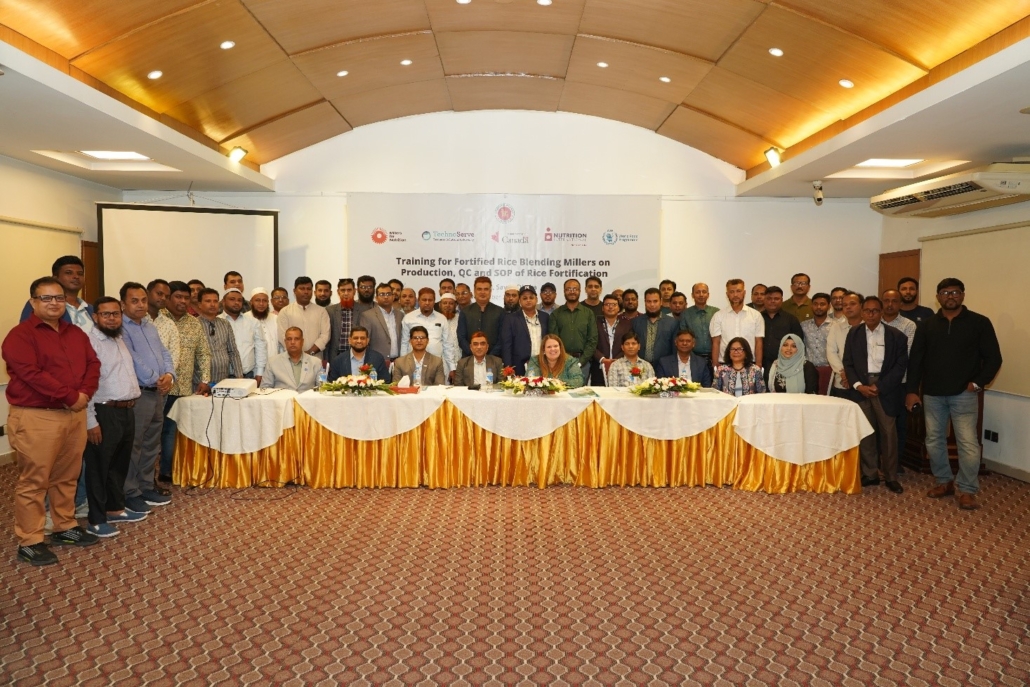
Dhaka, Bangladesh: Collaboration of Millers for Nutrition Coalition (powered by TechnoServe), Nutrition International and World Food Programme successfully organized a two-days training program on Production, Quality Control, Quality Assurance and Standard Operating Procedures (SOP) for Rice Fortification. The training, held in two batches; 1st batch on 22–23 November 2025 and 2nd batch on 24-25 November 2025 at BRAC CDM, Savar, Dhaka, brought together fortified rice blending millers from across the country. A total of 140 fortified rice blending mill owners & representatives participated in the program.
The primary objective of the program was to enhance the capacity and technical skills of blending millers in rice fortification production, quality control, quality assurance, and adherence to SOPs, thereby supporting the efficient and consistent production and distribution of fortified rice under the Social Safety Net Programme (SSNP) run by the Government of Bangladesh.
Expert resource persons from TechnoServe, World Food Programme (WFP), Nutrition International (NI), Bühler, Directorate General of Food (DG Food), and Department of Women Affairs (DWA) facilitated training sessions.
A brief inaugural session was held on the first day, with the Chief Guest Mr. Md. Abul Hasanath Humayun Kabir, Director General of Directorate General of Food (DG Food). Md. Firoz Uddin Khalifa, Joint Secretary, Ministry of Women and Children Affairs; Maribeth Black, Deputy Head of Program, WFP; and Sayed Julfiqur Mahmud Niaz, President, Bangladesh Fortified Rice Millers Association (BFRMA), were present as Special Guests.
Md. Guljer Ahmmed, Country Program Manager, TechnoServe; Dr. Mohammad Mahbobor Rahman, Senior Programme Policy Officer, WFP; and Md. Akib Abrar, Program Officer, Nutrition International (NI), Bangladesh, delivered welcome remarks.
All speakers highlighted the critical importance of robust Quality Control (QC) and Quality Assurance (QA) practices in fortified rice blending to ensure the production and distribution of high-quality fortified rice under the Social Safety Net Programmes (SSNP) of the Government of Bangladesh.
Mr. Md Abul Hasanath Humayun Kabir, Directorate General of Food (DG Food), attended as Chief Guest, he emphasized the important role played by Fortified Rice Blending Millers for supporting Government on production and distribution of fortified rice maintaining the quality and ensuring food safety. He commended TechnoServe, NI and WFP’s continued efforts in strengthening Bangladesh’s food fortification ecosystem.
Following the opening ceremony, participants engaged in a series of thematic modules, including classroom lectures, technical presentations, practical demonstrations, group discussions, Q&A sessions, and hands-on exercises focused on monitoring and inspection of fortified rice. Technical experts from TechnoServe, WFP, Bühler and NI led the sessions, ensuring comprehensive coverage of the training curriculum.
The event concluded with strong commitments from TechnoServe, WFP andNI to continue supporting the wider expansion and acceleration of the rice fortification program. Participating millers also shared practical recommendations aimed at further strengthening program implementation at the field level.
Md. Guljer Ahmmed, Country Program Manager, TechnoServe; Dr. Mohammad Mahbobor Rahman, Senior Programme Policy Officer, WFP; and Md. Akib Abrar, Program Officer, Nutrition International (NI), Bangladesh, also delivered their concluding remarks, expressing appreciation for the active participation and cooperation of all attendees.
In closing session of the last day, Md. Jamal Hossain, Additional Director General, Directorate General of Food (DG Food), attended as Chief Guest. He emphasized the government’s ongoing commitment to rice fortification program and expected fortified rice blending millers’ strong commitment to production and distribution of good quality fortified rice in the rice fortification program. Extended thanks to the participants, stakeholders, and development partners for their contributions and support to the training program before formally declaring the event closed.
The event concluded with commitments from TechnoServe, WFP, NI, to continue supporting blending millers in producing good quality fortified rice in SSNPs.
https://millersfornutrition.com/wp-content/uploads/2025/11/BANG.jpg9781467Namrata Kainturahttps://millersfornutrition.com/wp-content/uploads/2023/12/Millers-For-Nutrition_Core-Logo_Orange-White_RGB-2.svgNamrata Kaintura2025-11-27 13:16:162025-11-27 13:19:42Training for Fortified Rice Blending Millers on QC, QA and SOP for Production of Fortified Rice.
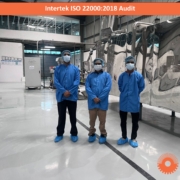
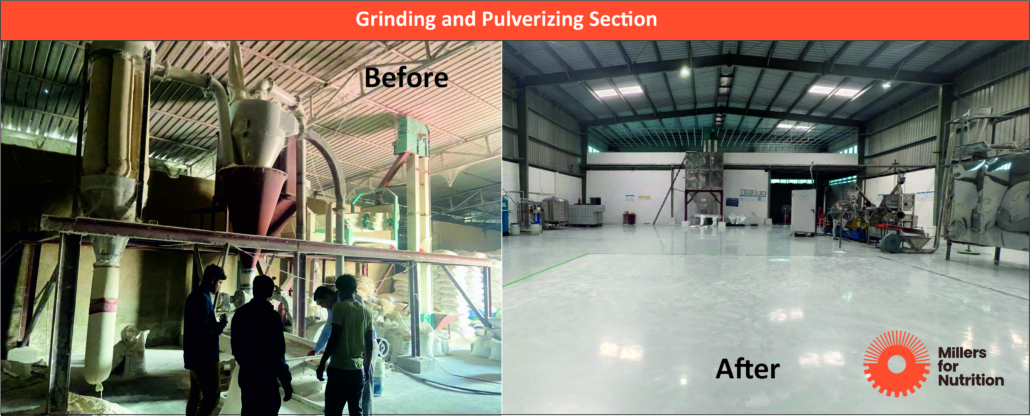
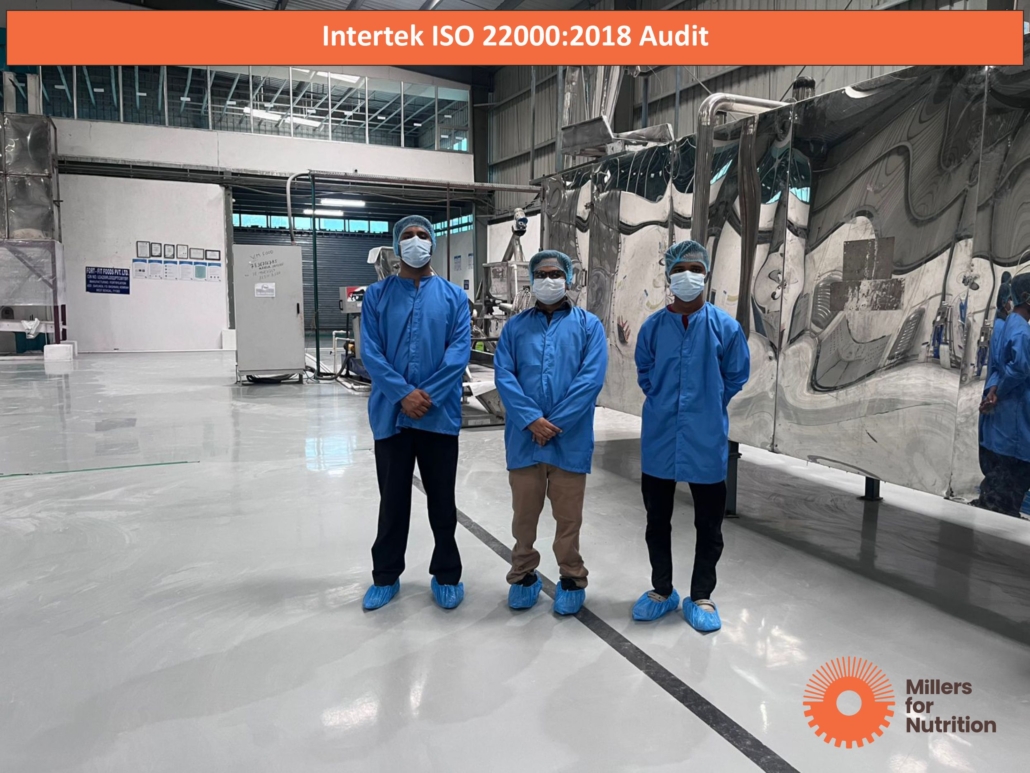
TechnoServe, a global non-profit organization active in nearly 30 countries, is implementing the Inspiring Good Nutrition Initiatives Through Enterprise (IGNITE) program to promote large-scale food fortification. TechnoServe has launched a groundbreaking initiative to establish Model Fortified Rice Kernel (FRK) units equipped with Food Safety Management Systems (FSMS) and ISO 22000 certification to enhance and sustain the quality of fortified rice kernels supplied through the Public Distribution System (PDS).
The project led by Abhishek Shukla, Country Program Manager – IGNITE India, envisions establishing six model FRK units in its initial phase, namely AJ Industries (Raipur), Creative Nutrition (Hyderabad), Shri Poornima Agro (Lucknow), Fortfit Food (Kolkata), Gandhi FRK (Fatehpur), and SVHG Agri Solutions LLP (Sangareddy). These units will serve as benchmarks, providing a platform for nearby FRK manufacturers, Centers of Excellence (CoEs), Technical Support Units (TSUs), and government delegations to visit, learn, and adopt international best practices in fortification, FRK manufacturing, food safety, and quality. As more FRK units join this journey, the impact will continue to grow — building trust, improving nutrition, and ensuring safer food for all.
Survey Insights and Challenges Identified (GAP Assessment)
A detailed survey across West Bengal, Uttar Pradesh, Chhattisgarh, and Telangana identified six key sites for the establishment of model units. The survey highlighted critical challenges such as:
1. Infrastructure & Facility Management
Inadequate infrastructure and storage conditions
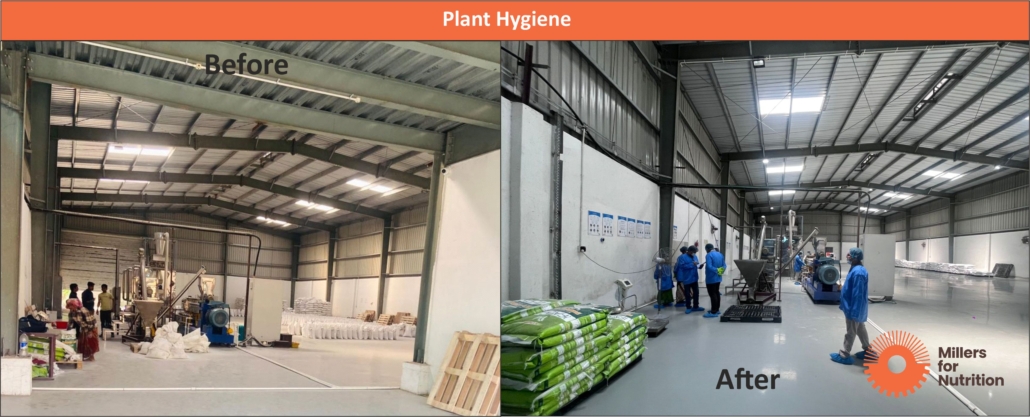
Gaps in maintenance and cleanliness
Poor ventilation, lighting, and temperature control affecting product safety
Lack of proper waste disposal leading to cross-contamination risks
2. Hygiene & Sanitation
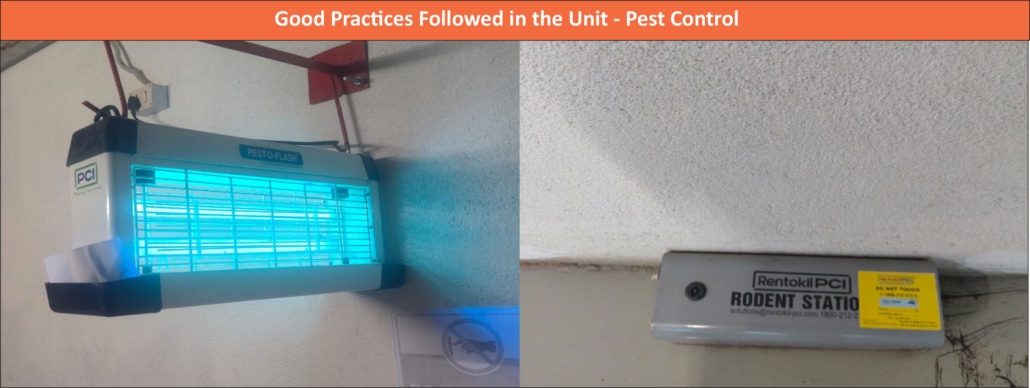
Weak hygiene, sanitation, and pest management practices
Limited awareness of personal hygiene protocols
Absence of proper cleaning schedules and monitoring systems
Inadequate training on food safety practices for workers
3. Systems & Process Control
Insufficient implementation of documented systems
Lack of control at critical points increases wastage and chances of defective batches
No proper traceability or recall system in case of defective products
Inconsistent calibration and maintenance of equipment leading to quality variations
4. Product Quality & Compliance
Fortified kernels may have inconsistent nutrient levels and higher chances of contamination
Variation in product appearance (size, shape, color) leading to consumer rejection
Reduced shelf life and stability of fortified kernels due to poor handling
Non-compliance can lead to audit failures, regulatory penalties, and loss of buyer trust
Addressing these areas is central to ensuring both the nutritional value and safety of fortified rice.
Building Capacity and Food Safety Culture
To strengthen systems sustainably, training programs are being conducted for employees at all units. These sessions focus on:
B
Building Capacity
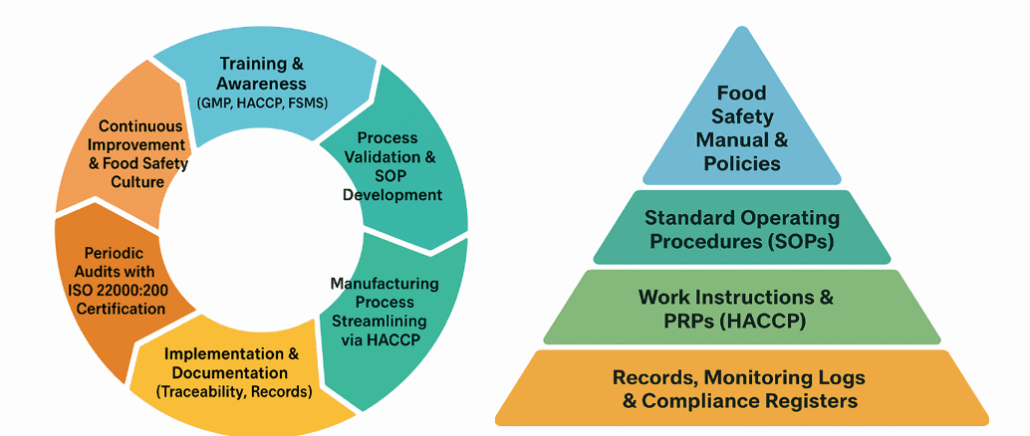
Development of standard operating procedures (SOPs) for each critical process step.
Process validation to ensure consistent and safe FRK production.
HACCP-based manufacturing process streamlining through structured training and documentation.
Identification and implementation of Critical Control Points (CCPs), Operational Prerequisite Programs (OPRPs), and Prerequisite Programs (PRPs) to improve and sustain product quality.
Establishing traceability and documentation systems for raw material to finished product.
Periodic audits and mock drills (e.g., product recall exercises) to test system readiness.
Capacity building of quality control teams with modern tools and testing methods.
Regular training programs for workers, supervisors, and management on GMP, HACCP, and FSMS.
Engagement with external experts and regulatory bodies for continuous learning.
Fostering Food Safety Culture
Leadership commitment – management leading by example in prioritizing food safety.
Promoting accountability at all levels – every worker responsible for hygiene and safety.
Encouraging reporting of issues without fear of blame to ensure proactive problem-solving.
Displaying food safety awareness posters and visual reminders across the unit.
Recognition and reward systems for staff adhering to good food safety practices.
Building a “safety-first mindset” where product quality and consumer health take precedence over speed or cost.
Such capacity building ensures that food safety becomes part of the organization’s culture, not just a compliance requirement.
FSMS and ISO 22000 Implementation
Through Normes Decodees’ expertise in consulting, auditing, and training, FRK units are being guided to achieve ISO 22000 certification, creating a structured framework for:
Hazard identification and risk control
Consistent quality assurance across production
Regulatory compliance at both national and international levels
Increased consumer confidence and market credibility
Enhanced efficiency through reduced waste and better process control
Development of robust documentation and SOPs at different levels
Nutritional and Public Health Impact of FRK
By embedding Food Safety Management Systems (FSMS) into day-to-day operations, fortified rice kernel production achieves long-term reliability, sustainability, and public health impact.
The adoption of fortified rice kernel under FSMS ensures:
Consistent Nutritional Value during production – Uniform enrichment with iron, folic acid, and vitamin B12 to ensure reliable nutritional benefits
Improved Public Health Outcomes – Reduction in anemia and micronutrient deficiencies among vulnerable populations.
Sustainable Health Gains – Strengthened immunity, cognitive growth, and overall well-being.
Cost-Effective Nutrition Delivery – A scalable, affordable approach without requiring dietary changes.
Stronger National Nutrition Programs – Supporting the Public Distribution System (PDS) and government-led initiatives.
ISO 22000-certified FRK units further safeguard nutrient stability and quality consistency through rigorous monitoring, validation, and control measures.
Vision for the Future
“The integration of FRK Manufacturing with ISO 22000 standards positions these Model FRK units as Centers of Excellence. These facilities not only demonstrate compliance and quality but also serve as models to inspire other FRK Units to adopt structured food safety practices”. says Abhishek Shukla, the driving force behind implementing robust Food Safety Management Systems in select FRK units across India’s major rice-producing states.
With continuous training, infrastructure strengthening, and robust FSMS adherence, the partnership between TechnoServe and Normes Decodees is driving a transformation of the fortified rice sector into a trusted, efficient, and sustainable industry.
This initiative reflects a shared commitment to advancing nutrition, food safety, and public health—paving the way for India’s fortified rice production to align with the highest global standards.
https://millersfornutrition.com/wp-content/uploads/2025/09/before-after-7.jpg18712494Namrata Kainturahttps://millersfornutrition.com/wp-content/uploads/2023/12/Millers-For-Nutrition_Core-Logo_Orange-White_RGB-2.svgNamrata Kaintura2025-09-22 14:17:072025-09-22 14:18:09Building Model FRK Units: A Food Safety Management System Approach
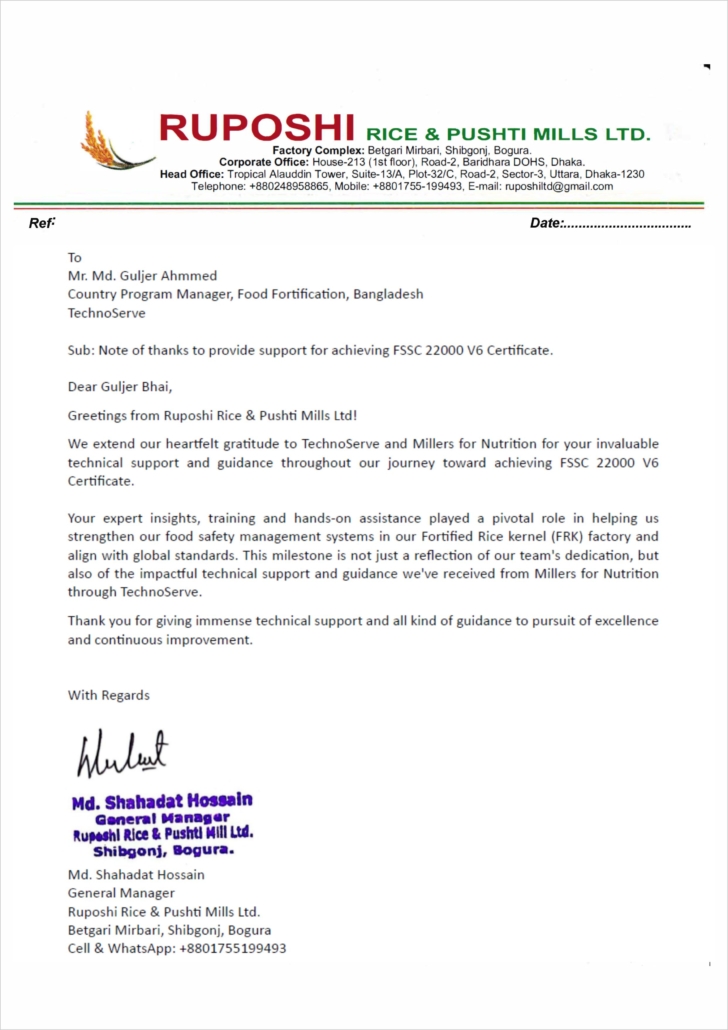
We are thrilled to share the success story of Ruposhi Rice & Pushti Mills Ltd, who recently achieved the prestigious FSSC 22000 V6 Certificate.
Read on as they express their heartfelt gratitude for the technical guidance and expertise provided by Millers for Nutrition, highlighting the impact of this collaboration on their food safety management systems.
https://millersfornutrition.com/wp-content/uploads/2025/09/header.jpg420852Namrata Kainturahttps://millersfornutrition.com/wp-content/uploads/2023/12/Millers-For-Nutrition_Core-Logo_Orange-White_RGB-2.svgNamrata Kaintura2025-09-17 09:30:252025-09-17 10:13:56Note of Thanks from Ruposhi Rice and Pushti Mills, Bangladesh
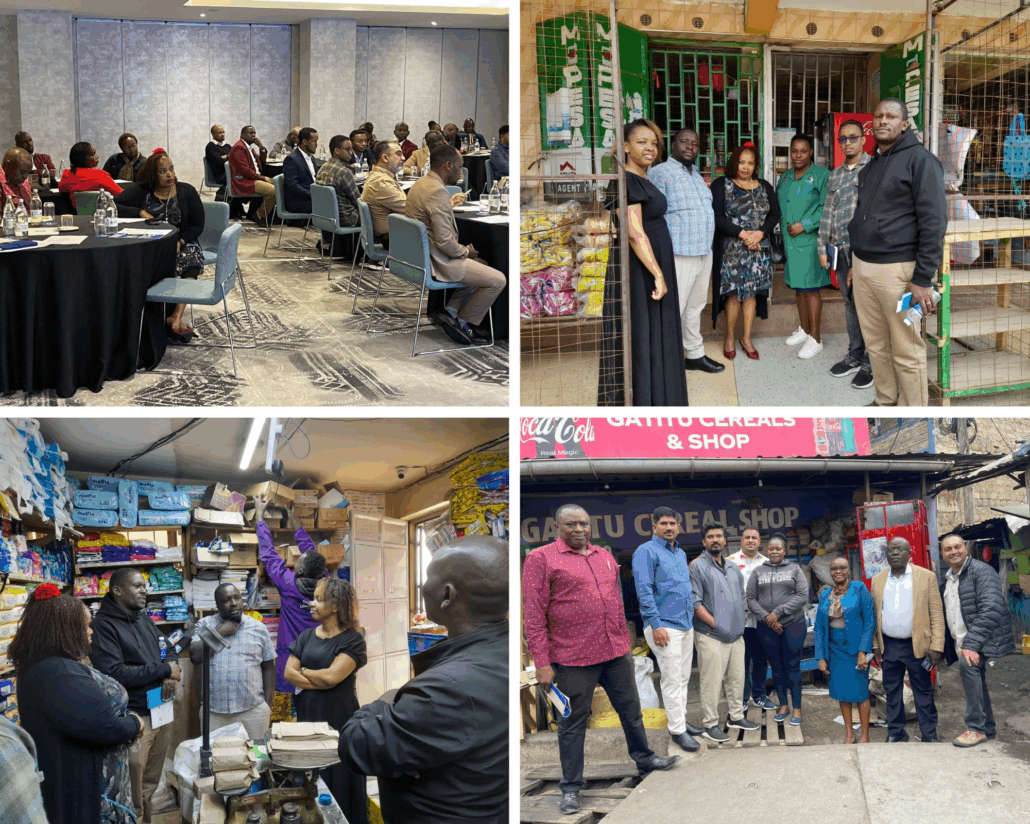
On the 3rd of July in Nairobi, Kenya, Millers for Nutrition alongside the National Duka Organization (NDO) and the Cereal Millers Association (CMA), hosted a dynamic workshop that brought together 40 senior leaders, including directors and sales executives from 21 milling companies. The goal: to spotlight the enormous, yet largely untapped, potential of Kenya’s Base of the Pyramid (BoP) market.
Representing 70% of the national population and valued at an estimated $19.8 billion, the BoP market offers a game-changing opportunity for millers, particularly in delivering safe, adequately fortified foods. Despite its size and strategic importance, this market remains underserved, with poor access to fortified products.
The workshop delivered more than just insights. Participants visited low-income neighbourhoods in Nairobi, experiencing firsthand the gaps and possibilities at the last mile. They engaged directly with duka owners and consumers and were introduced to NDO’s aggregation model, a logistical innovation designed to simplify distribution to micro-retailers and reduce barriers for processors aiming to serve this segment.
This high-impact engagement not only strengthened market awareness among millers but also aligned directly with the Millers for Nutrition program’s mission: to scale access to fortified foods where they’re needed most. By opening new pathways into the BoP market, the workshop marked a critical step toward advancing both business growth and better nutrition outcomes for millions of Kenyans.
The top left picture captures participants at the workshop in Nairobi, Kenya and some more pictures from millers’ visits to neighborhood shops.
https://millersfornutrition.com/wp-content/uploads/2025/07/Market-visit-1.jpg9601280Juliana Jacobhttps://millersfornutrition.com/wp-content/uploads/2023/12/Millers-For-Nutrition_Core-Logo_Orange-White_RGB-2.svgJuliana Jacob2025-07-10 13:22:482025-07-10 13:34:42Unlocking Kenya’s $19.8 Billion BoP Market: Millers Step Up to Serve the Underserved
We are thrilled to share exciting news from Indonesia! Millers for Nutrition, a global coalition dedicated to enhancing food fortification, has officially launched its operations in the country. This major step was revealed at the “Large Scale Food Fortification (LSFF) for Health, Nutrition Status and Productivity” convening, co-hosted by the Indonesian Nutrition Foundation for Food Fortification (KFI) and TechnoServe.
Key stakeholders, including representatives from the Government of Indonesia (Ministry of National Development Planning (BAPPENAS), National Food Agency, and State Logistics Agency (BULOG), leading industry players, and national associations for wheat flour, edible oil, and rice millers, attended the launch event. Also present were representatives from our strategic fortification partners BASF, dsm firmenich, MC | Stern Vitamin, Buhler and Hexagon Nutrition. Their participation highlighted a unified commitment to improving national nutrition outcomes.
Millers for Nutrition supports millers to adequately fortify staple foods like wheat flour, edible oil, and rice with essential micronutrients. This aligns perfectly with the goals of KFI, a highly respected Indonesian food fortification foundation known for its expertise and commitment to the quality and sustainability of LSFF.
Indonesia marks the seventh country where Millers for Nutrition operates, joining Bangladesh, Ethiopia, India, Kenya, Nigeria, and Tanzania. The coalition employs an innovative model, connecting strategic fortification partners, technical experts, and other ecosystem partners to provide best-in-class technical assistance and business advisory services. This approach helps millers strengthen food quality, boost operational competitiveness, and unlock new market opportunities.
Monojit Indra, Senior Practice Leader at TechnoServe & Program Leader for Millers for Nutrition Asia, expressed his enthusiasm, stating, “We want to unite passionate stakeholders to support Indonesian Millers and food processors in achieving fortification excellence and driving meaningful change in the battle against malnutrition. Together, we can transform the future of nutrition in Indonesia.”
Mrs. Diah Lenggogeni, the Director for Public Health and Nutrition in BAPPENAS, delivered a keynote address, emphasizing the critical role of fortified foods in improving Indonesia’s health and nutritional status. She highlighted that addressing micronutrient deficiencies is a shared commitment requiring synergistic partnerships between the government, food industry, and supporting organizations.
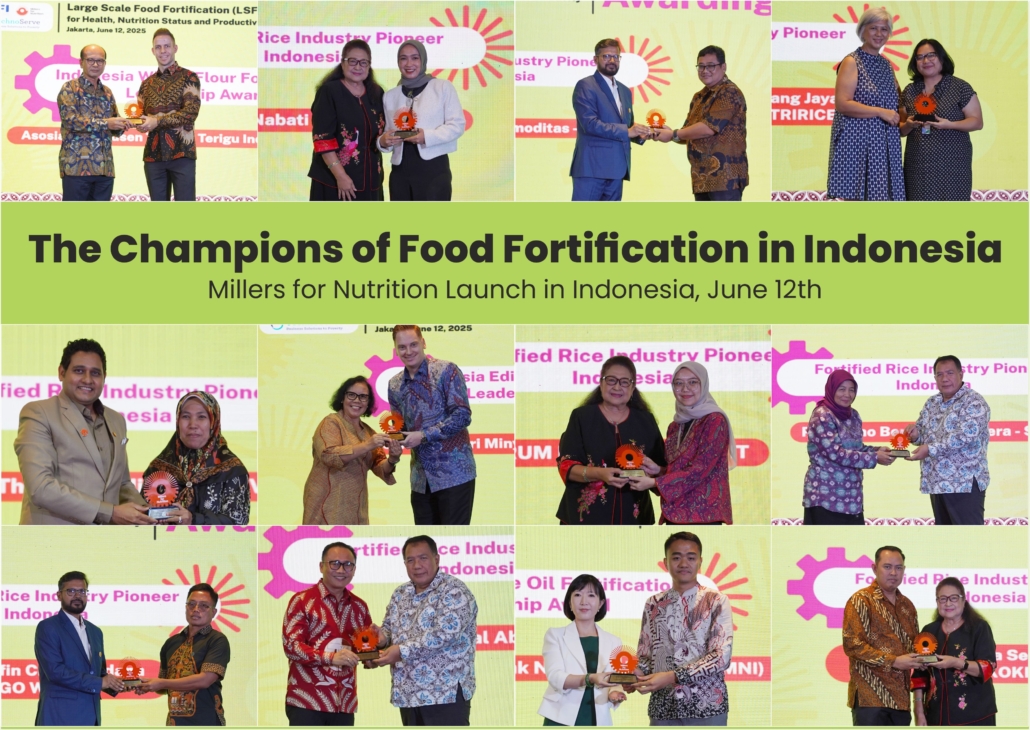
Indonesia Wheat Flour Fortification Leadership Award: Asosiasi Produsen Tepung Terigu Indonesia (APTINDO) Indonesia Edible Oil Fortification Leadership Award: Gabungan Industri Minyak Nabati Indonesia (GIMNI) and Asosiasi Industri Minyak Makan Indonesia (AIMMI) Indonesia Rice Fortification Advocate: Ir. Sutarto Alimoeso, MM
Additionally, several fortified rice producers were celebrated as Fortified Rice Industry Pioneers in Indonesia: PT. Thara Jaya Niaga PT. Food Station Tjipinang Jaya (PERSERODA) PT. Sinar Makmur Komoditas PT DEWA TUNGGAL ABADI Perum BULOG PT PANGAN NABATI UMBI NUSANTARA PT. Siamo Berkah Sejahtera PT. Microfin Cipta Perdana BPS – PT Buyung Poetra Sembada, TBK
https://millersfornutrition.com/wp-content/uploads/2025/07/DEN09046-scaled.jpg17072560Juliana Jacobhttps://millersfornutrition.com/wp-content/uploads/2023/12/Millers-For-Nutrition_Core-Logo_Orange-White_RGB-2.svgJuliana Jacob2025-07-09 13:51:012025-07-09 13:51:23Millers for Nutrition 7th Country Launch in Indonesia
LAGOS, NIGERIA – A significant partnership is underway to establish a state-of-the-art oil refinery in Gombe State, North-Eastern Nigeria, promising to improve nutrition and create economic opportunities for thousands. The Gombe State Oil Modular Refinery Project is a collaborative effort involving Millers for Nutrition and their strategic fortification partner BASF, who will provide funding support. EDCEL Ltd. and the Gombe State Groundnut Oil Millers Association (GSGOMA) will then establish the oil refinery.
The project, discussed during a recent closed-door executive roundtable, aims to build a 20-ton service refinery at the Gombe groundnut oil industrial center. This facility will focus on producing refined groundnut oil fortified with Vitamin A, addressing nutritional deficiencies prevalent in the region. This is expected to benefit approximately 10,000 youths and women under the age of 45 and unlock a 500 million naira investment (about 315,000 US Dollar).
Alhaji Umar Madugu, Deputy Chairman of GSGOMA, highlighted the dual benefits of the project. “This partnership will be an opportunity for us local millers to produce refined oil with Vitamin A that will improve the health of the people of North-Eastern Nigeria,” he said. “Another good part of this partnership is that it is economically beneficial to the people.”
Ayodele Tella, Senior Program Manager at Millers for Nutrition, emphasized the collaborative spirit and mission behind the project. “Vision, purpose, alignment, and partnership truly captured the atmosphere of the discussion,” Tella stated. “The focus was on establishing a 20-ton service refinery. The B2B linkage and sponsored coordination between EDCEL Ltd, the sole producer of the diluted vitamin A palmitate fortificant for micro-small oil millers, and the leadership of the Gombe state groundnut oil millers association, perfectly embodies the core mission of Millers for Nutrition. This initiative aims to sustainably provide adequately fortified staples to vulnerable consumers through effective private sector partnerships.”
EDCEL Ltd., playing a crucial role in the project by providing vitamin A fortificant, also shared their perspective. Cletus Chibuko, Managing Director of EDCEL Ltd., noted, “We are proud to be a part of this project that will not only enhance nutritional outcomes but also empower local communities. Providing the necessary fortificant is a key step in ensuring the long-term health benefits of this initiative.”
This partnership aligns with the broader mission of Millers for Nutrition, a coalition dedicated to helping millers fortify staple foods like wheat, maize, edible oil, and rice. Millers for Nutrition supports millers across eight countries in Africa and Asia, including Nigeria, connecting them with experts and resources to improve food nutrition and business competitiveness. Millers for Nutrition is powered by TechnoServe with funding support from the Gates Foundation.
As the project progresses, it holds the promise of serving as a model for sustainable development and public-private partnerships across Nigeria, showcasing how strategic collaborations can drive tangible, positive change in communities.
At the closed-door executive roundtable, attendees included (Sitting L-R) Alh.Umar Madugu, deputy chairman, Gombe State Groundnut Oil MIllers Association; Mr Sam Onukwue, GMD/CEO Mega Capital; Cletus Chibuko, managing director of Edcel Ltd; Mrs.Talatu Jubril, lawyer, Yahdima Chambers; Sani Yau, chairman, Gombe State Oil MIllers Association; (Standing L-R) Cyprain C. Ugwejeh, Project Consultant; Babajide Ogunleye, Food Fortification Specialist at TechnoServe; Olusola Showunmi, Senior Food Fortification Specialist at TechnoServe; Ayodele Tella, Senior Program Manager, TechnoServe; Ifunanya Aginam, business development / account manager at BASF; Uche Emmanuel, managing director at Mega Capital; Captain Peter Ngere, Director, Mega Capital.
https://millersfornutrition.com/wp-content/uploads/2025/06/IMG_05421-scaled.jpg17072560Juliana Jacobhttps://millersfornutrition.com/wp-content/uploads/2023/12/Millers-For-Nutrition_Core-Logo_Orange-White_RGB-2.svgJuliana Jacob2025-06-12 13:49:012025-06-12 13:49:19Millers for Nutrition with EDCEL, BASF, and Mega Capital Facilitate B2B Linkage for Groundbreaking Oil Refinery Supporting 10,000 Youths and Women in North-Eastern Nigeria.
1. What inspired Shyamatara Rice Mills to venture into fortified rice production?
Shyamatara Rice Mills (P) Limited has played a pivotal role in improving the nutrition space of the people of West Bengal since 2005. Our family being present in the rice milling industry for the past 47 years has adopted and understood the needs of the market as and when the market demanded a change. With the food quality being deteriorated day by day, our focus changed to how we can provide nutrition through supply of fortified rice in the open market in West Bengal in the variant which is most consumed by the people of Eastern part of India.
2. Can you share the challenges and successes you’ve faced during the launch of Bengal Crown Fortified Rice?
Our venture into fortified rice in West Bengal was a decision made consciously over the past 6 months after realizing the true need of the product in the open market. Being one of the first movers in West Bengal for this product, our main challenge was to ensure our marketing is such that we are able to convince the consumers about the importance of Fortified Rice and how just by adding it in your daily diet, there is a stark difference in their vitamins, zinc and Iron Levels which are crucial in the overall health for a human.
3. How do you see fortified rice contributing to addressing micronutrient deficiencies in West Bengal?
Fortified Rice has already been quite a success story for the Indian Government ever since it has been implemented in the rice supplied for the Public Distribution System. Almost 65% Indians consume PDS supplied fortified rice in India. Our focus is on the remaining 35%. Almost 1/3rd of the population being exposed to malnutrition because of non consumption of fortified rice is a huge number. We can surely address low Iron and Vitamin levels strongly as it is the most economical way of getting a balanced diet across all socio-economic groups.
4. What role do you think millers play in ensuring nutrition security, and how can we collaborate further?
Millers play a very crucial role in ensuring nutrition security for all as the Government has trusted the milling stage in the whole cycle to ensure true and fair fortification of staples. We as millers have to ensure we are able to keep the Government’s trust. In the future, we can collaborate with NGOs, Government agencies and industrial bodies to ensure fortification is understood and accepted by every consumer.
5. Looking ahead, what are your plans for expanding fortified rice production and distribution?
We have already introduced fortified rice across most varieties of non basmati rice processed by us and most of the products are available on E- commerce platforms like Amazon and Flipkart. Going forward, we envision that fortified rice will be accepted at such levels in the open market that there will be only fortified rice production and distribution across all variants processed by us.
6. Any message for our readers, particularly those interested in nutrition and fortification?
The whole community collectively has to ensure acceptability of fortified staples across all consumer levels. Consumer awareness holds the key to ensure success of this dietary change in our daily lives which we want to bring. There is a vey big opportunity for fortified staples if marketed well and accepted by consumers. Entry of more and established players will only help in achieving the motto of bringing fortified food in every plate across the globe.
https://millersfornutrition.com/wp-content/uploads/2025/05/Miller-of-the-Month-May-2025.jpg533800Namrata Kainturahttps://millersfornutrition.com/wp-content/uploads/2023/12/Millers-For-Nutrition_Core-Logo_Orange-White_RGB-2.svgNamrata Kaintura2025-05-14 18:11:222025-05-19 22:07:46May 2025 Miller of the Month: Abhishek Agarwal – Director of Shyamatara Rice Mills, India