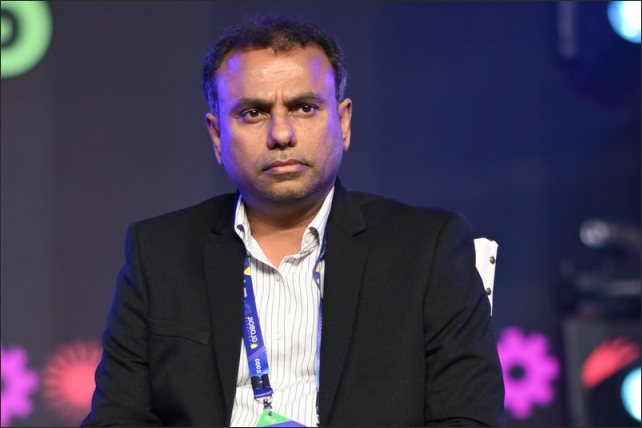
Miller in Spotlight – Mr. Cheran K, CEO – Kaleesuwari Refinery Pvt. Ltd.

Q. Kaleesuwari has been a household name for over five decades. What was the defining moment that led the company to transition from being a provider of ‘pure oil’ to becoming a champion of ‘fortified nutrition’ through initiatives like the Vita D3+ campaign?
For over five decades, Kaleesuwari built its reputation on purity and trust. However, as we engaged more deeply with consumers, nutrition experts, and public-health stakeholders, one reality became clear — India’s hidden hunger, especially Vitamin A and D deficiency, cannot be addressed by availability of food alone; it requires nutrient-enriched staples.
Edible oil is consumed daily across socio-economic segments and geographies. That makes it a powerful and scalable nutrition delivery vehicle. This insight became the defining moment for us. The Vita D initiative was therefore not just a product upgrade, but a purpose-led transition — from being a provider of pure oil to becoming a partner in preventive nutrition.
It aligns perfectly with our long-standing philosophy: what reaches the consumer’s kitchen must improve their wellbeing, not just meet a functional need.
Q. What is the biggest challenge Kaleesuwari has faced in EO fortification?
The most significant challenge has been balancing nutritional compliance with commercial and sensory expectations.
Fortification requires:
• highly precise micronutrient dosing
• stability across the product’s shelf life
• zero impact on taste, aroma, and appearance
At the same time, it must remain affordable for mass consumers.
In the early stages, creating process discipline, supplier alignment for premix quality, and real-time monitoring systems were critical. Today, the challenge has evolved into driving consumer awareness so that fortification is valued and not seen as just another label claim.
Q. With your rigorous ’80-point quality check’ process, how has Kaleesuwari integrated EO fortification into its manufacturing without compromising the taste and stability that consumers expect from brands like Gold Winner and Cardia?
Our 80-point quality check system was actually an enabler for seamless integration.
Fortification has been embedded at three levels:
Output assurance
• Retention sample testing for micronutrient stability across shelf life
• Sensory benchmarking against non-fortified control oils
This ensures that brands like Gold Winner and Cardia retain their same taste, lightness, and cooking performance, while delivering added nutrition — which is non-negotiable for us.
Input control
• Validation of certified premix suppliers
• Stability and compatibility testing with different oil matrices
Process control
• Automated and calibrated dosing systems
• Homogeneity validation at defined batch intervals
• In-line and post-blend sampling protocols
Q. How do your quality, operations, and procurement teams work together to ensure consistent standards and reliable supply to consumers?
Fortification success depends on synchronised execution across procurement, operations, and quality:
• Procurement ensures long-term partnerships with certified premix suppliers, dual sourcing strategies, and strict inbound quality protocols.
• Operations manages calibrated dosing, batch traceability, and process standardisation across plants.
• Quality drives validation, periodic audits, and regulatory compliance, including FSSAI fortification norms.
We operate through a closed-loop review system, where deviations — however small — trigger root-cause analysis and corrective action. This guarantees that the consumer gets the same nutritional assurance in every pack, every time.
Q. India faces a significant challenge with Vitamin A and D deficiencies. How does Kaleesuwari view its role as a miller in the ‘Millers for Nutrition’ coalition to help bridge this nutritional gap, especially for semi-urban and rural populations?
As a leading edible-oil miller, we believe our responsibility goes beyond manufacturing.
Through the Millers for Nutrition coalition, our focus is on:
• Making fortified oil accessible to semi-urban and rural households
• Supporting large-scale behaviour-change communication
• Partnering in institutional and public-distribution channels
• Sharing best practices in process, quality, and compliance
Because edible oil has near-universal penetration, millers like us can help bridge the micronutrient gap at population scale without requiring any change in food habits.
Q. In your experience, what is the biggest challenge in moving the needle on consumer awareness for fortified foods, and how are you tackling it?
The biggest challenge is that fortification is an invisible benefit.
Consumers can see purity and price — but they cannot see micronutrients.
Our approach has been to:
• Simplify communication through campaigns like Vita D
• Use on-pack education with the +F logo
• Drive doctor, nutritionist, and digital advocacy
• Position fortification as family wellness, not a technical feature
The shift we are working towards is from “oil that cooks well” to “oil that cares for your family’s health.”
Q. As our ‘Miller in Spotlight,’ how does Kaleesuwari envision the long-term roadmap for its fortification journey?
Our fortification roadmap is built on three pillars:
Nutrition leadership
• Continuous improvement in micronutrient stability
• Collaboration with policymakers and industry bodies
• Consumer education at scale
Our long-term vision is clear:
Every Kaleesuwari pack should not only deliver purity and performance, but also measurable nutritional value to the Indian consumer.
1. Universalisation
Ensuring fortification across our entire edible-oil portfolio so that nutrition is not a premium feature but a standard.
2. Accessibility
Taking fortified oils deeper into:
• rural markets
• value packs
• institutional channels
3. Nutrition leadership
• Continuous improvement in micronutrient stability
• Collaboration with policymakers and industry bodies
• Consumer education at scale
Our long-term vision is clear:
Every Kaleesuwari pack should not only deliver purity and performance, but also measurable nutritional value to the Indian consumer.